Introduction
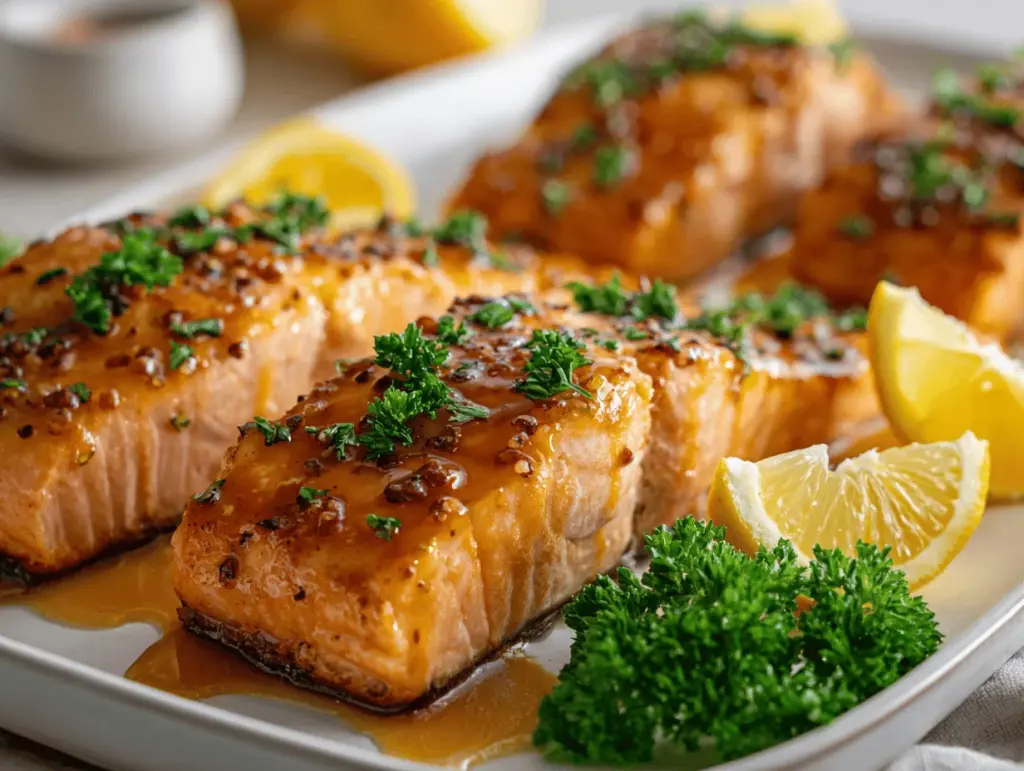
The first bite of maple dijon glazed baked salmon is pure magic—sweet, tangy, and savory all at once, with that caramelized crust that makes you want to lick your fork. I still remember the first time I made this recipe. It was a chilly Thursday evening, and I was hunting through my fridge for something easy but impressive. That’s when the idea for a maple dijon glazed baked salmon hit me. I’d read somewhere that the combo of maple syrup and Dijon mustard is a chef’s secret weapon for coaxing big flavors out of even the simplest proteins. I figured, why not try it on salmon?
Ever since then, this maple dijon glazed baked salmon has become my go-to for healthy weeknight dinners and dinner parties alike. It’s got that wow factor—sticky glaze, flaky salmon, and a pop of fresh herbs—that makes you feel like you’ve pulled off something fancy, even if it only took 20 minutes start to finish. Plus, it’s one of those rare recipes that checks every box: nutritious, flavorful, and so easy you can make it after a long day at work (trust me, I’ve done it more times than I can count).
If you’re looking for a healthy dinner recipe that you’ll actually crave, this maple dijon glazed baked salmon is for you. It’s perfect for anyone trying to eat clean, impress guests, or just sneak more omega-3s into their diet. As someone who’s tested countless salmon recipes as both a home cook and a culinary instructor, I can honestly say this one wins every time. You’ll find yourself making it again and again—not just because it’s healthy, but because it’s genuinely irresistible.
Why You’ll Love This Maple Dijon Glazed Baked Salmon Recipe
- Quick & Easy: This salmon recipe comes together in under 25 minutes, so it’s perfect for those hectic weeknights or when you just want to relax and not fuss over dinner.
- Simple Ingredients: No fancy shopping trips here—just a handful of pantry staples, fresh salmon, and a couple of flavor-packed add-ons you probably already have.
- Perfect for Any Occasion: Whether you’re whipping it up for a family dinner, a cozy date night, or impressing friends at a potluck, this maple dijon glazed baked salmon always shines.
- Consistently Crowd-Pleasing: Even picky eaters and self-proclaimed “non-fish people” have cleaned their plates. Kids, adults, and even your neighbor who claims to hate mustard will love it!
- Unbeatable Flavor: The combination of sweet maple, zingy Dijon, and a hint of garlic creates a glaze that sticks beautifully to the salmon and caramelizes in the oven. It’s next-level comfort food that still feels light and nourishing.
What really sets this maple dijon glazed baked salmon apart is the balance between the sticky-sweet glaze and the natural richness of the salmon. I blend the maple syrup and Dijon with a splash of lemon juice and a little garlic—it’s just enough to brighten things up without overwhelming the fish. And because you’re baking the salmon, you get a perfectly cooked, tender fillet every single time. No more dry, sad salmon dinners (been there, not going back). Plus, with my tested technique, the glaze never runs off or burns—it clings and caramelizes like a dream.
This isn’t just a recipe; it’s one of those meals that makes you close your eyes in happiness after the first bite. There’s something incredibly comforting about it, but it’s also refined enough to serve to guests. And if you’re the type who likes to meal prep, you’ll love how well it reheats. Trust me, once you try this maple dijon glazed baked salmon, you’ll find yourself making it for every occasion—just like I do.
What Ingredients You Will Need
This recipe uses simple, wholesome ingredients to deliver bold flavor and satisfying texture without any fuss. Most of these are pantry staples, and you can easily swap things in or out depending on what you have.
- Salmon Fillets (4 pieces, 6 oz/170 g each): Choose skinless or skin-on based on your preference. Wild-caught is my go-to for flavor, but farmed works too.
- Pure Maple Syrup (3 tablespoons, 45 ml): Real maple syrup is key! The fake stuff just doesn’t caramelize or taste the same. I usually grab Grade A dark for the richest flavor.
- Dijon Mustard (2 tablespoons, 30 ml): Smooth and tangy—this is what gives the glaze its kick. I like Maille or Grey Poupon, but any Dijon will do.
- Fresh Lemon Juice (1 tablespoon, 15 ml): Brightens up the glaze and balances the sweetness. Bottled works in a pinch.
- Garlic (2 cloves, minced): Adds savory depth. You can substitute 1/2 teaspoon garlic powder if you’re out of fresh.
- Olive Oil (1 tablespoon, 15 ml): Helps the glaze stick and keeps the salmon moist. Avocado oil is a good swap.
- Salt (1/2 teaspoon, 3 g): Brings everything together. I use kosher salt for even seasoning.
- Black Pepper (1/4 teaspoon, 1 g): Freshly cracked for the best flavor.
- For garnish (optional):
- Chopped fresh parsley or dill
- Lemon zest
- Toasted walnuts or pecans (for a little crunch, if you’re feeling fancy)
Substitution guidance:
- Swap maple syrup with honey for a different sweetness profile (not vegan, though).
- Use whole grain mustard for a bit more texture if you like things rustic.
- No fresh lemon? Try apple cider vinegar for tang.
- Dairy-free? No problem—this recipe is naturally dairy-free.
- Gluten-free? All ingredients here are gluten-free, but double-check your mustard if you’re super sensitive.
Sometimes I’ll even add a pinch of smoked paprika to the glaze for a little extra depth. If you’re serving this in the summer, try adding a handful of chopped fresh herbs right before serving for a burst of color and flavor.
Equipment Needed
- Baking Sheet or Oven-Safe Dish: You don’t need anything special. I use a rimmed baking sheet lined with parchment for easy cleanup, but a glass or ceramic baking dish is fine too.
- Parchment Paper or Aluminum Foil: Makes cleanup a breeze and helps keep the glaze from sticking. If you’re out, give your pan a quick brush with oil.
- Small Mixing Bowl: For whisking up the glaze. I love my little glass prep bowls, but any small bowl works.
- Whisk or Fork: To blend the glaze until smooth. I’ve used a fork in a pinch—no biggie.
- Basting Brush or Spoon: A silicone brush gives you even coverage, but a regular spoon works if that’s all you’ve got.
- Measuring Spoons and Cups: For accuracy—especially important with sticky stuff like maple syrup.
- Fish Spatula (optional): Makes lifting the cooked salmon easier, but I’ve used a regular spatula plenty of times.
Honestly, you don’t need any fancy gadgets for this maple dijon glazed baked salmon. I’ve made it in rental kitchens with just a foil-lined pan and a soup spoon! If you use silicone brushes, just remember to rinse them right away—the glaze can get sticky fast. And if you’re on a budget, dollar store baking sheets are just fine for this recipe. Just avoid broiling on really thin pans—they can warp.
How to Make Maple Dijon Glazed Baked Salmon
-
Prep your oven and pan:
Preheat your oven to 400°F (200°C). Line a baking sheet with parchment paper or foil for easy cleanup. This saves you from scrubbing sticky glaze later (I learned that the hard way).
-
Make the glaze:
In a small mixing bowl, whisk together 3 tablespoons (45 ml) pure maple syrup, 2 tablespoons (30 ml) Dijon mustard, 1 tablespoon (15 ml) fresh lemon juice, 2 minced garlic cloves, 1 tablespoon (15 ml) olive oil, 1/2 teaspoon (3 g) salt, and 1/4 teaspoon (1 g) black pepper. The glaze should be smooth and pourable, with a golden color and a zippy smell from the mustard.
-
Arrange the salmon:
Place 4 salmon fillets (about 6 oz/170 g each) on the prepared baking sheet, skin-side down if your fillets have skin. Pat them dry with a paper towel—this helps the glaze stick better. If you see any pin bones, pull them out with tweezers (I always check, just in case).
-
Glaze the salmon:
Brush or spoon the maple dijon glaze generously over each fillet, covering the tops and sides. Reserve a tablespoon or two of glaze for later. The salmon should glisten and smell amazing already. Let it sit for 5 minutes if you have time—this helps the flavors soak in.
-
Bake:
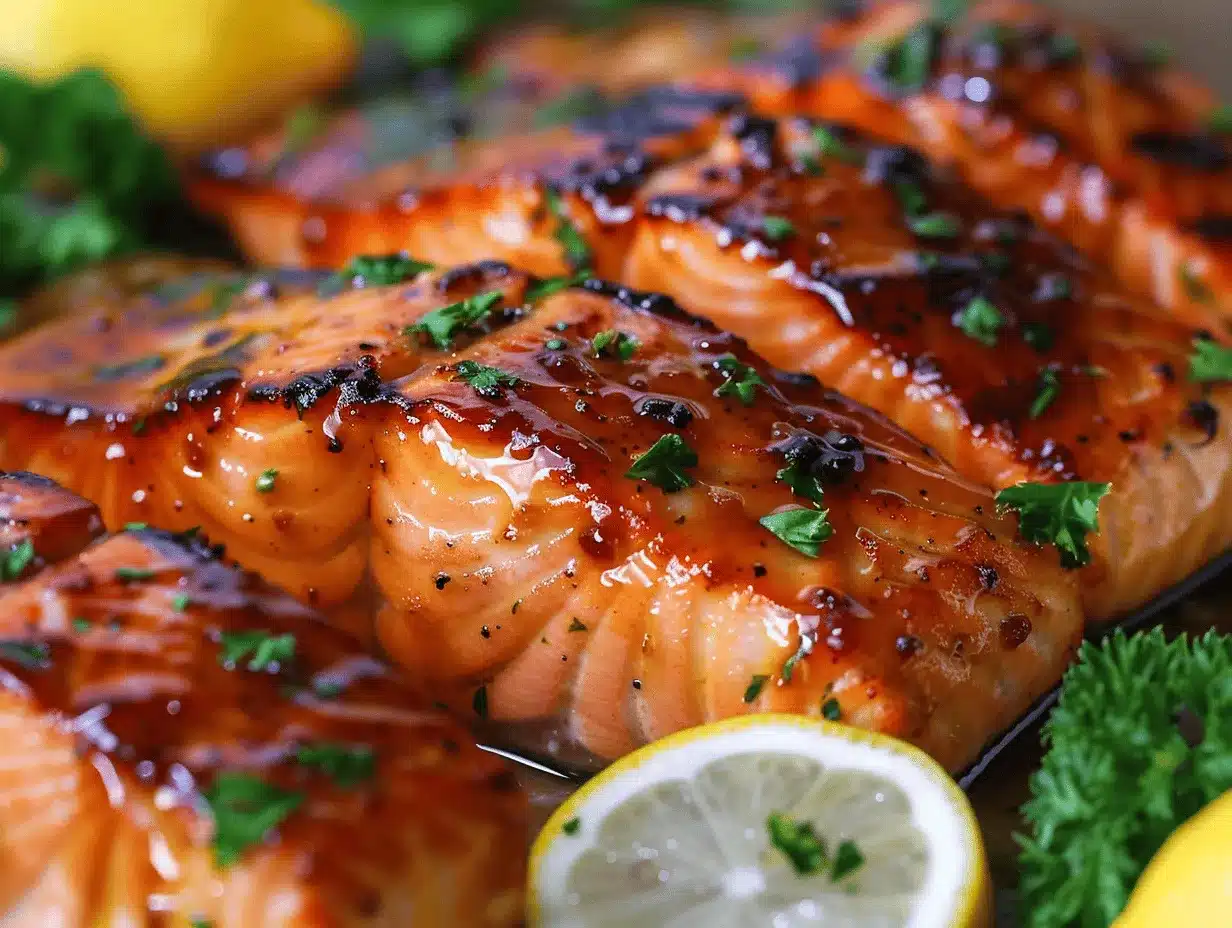
Slide the pan into the oven and bake for 12–15 minutes, depending on thickness. For an average fillet (1-inch/2.5 cm thick), 14 minutes is usually perfect. You’ll know it’s done when the fish flakes easily with a fork and looks just barely opaque in the center.
Note: If your pieces are thinner, start checking at 10 minutes. Overcooked salmon is dry and sad—trust me, keep an eye on it!
-
Caramelize the glaze (optional but awesome):
For a sticky, caramelized finish, turn your oven to broil for 1–2 minutes right at the end. Watch closely, as the sugars in the maple syrup can go from golden to burnt in seconds. The top should bubble and darken a bit—don’t walk away!
-
Rest and garnish:
Remove the salmon from the oven and let it rest for 2–3 minutes. Brush with the reserved glaze and sprinkle with chopped fresh parsley, dill, or a little lemon zest if you like. The aroma at this point is unreal.
-
Serve:
Use a fish spatula or wide lifter to gently transfer each fillet to a plate. Spoon any extra glaze from the pan over the top. Serve immediately for the best texture (though it’s also delicious at room temp).
Pro tip: If you ever notice white stuff (albumin) seeping out of your salmon while baking, don’t panic—it’s just a protein that’s totally harmless. It happens when salmon is cooked a little too fast or hot, but it won’t affect flavor. Just wipe it away before serving if you want a perfect plate.
Cooking Tips & Techniques
- Don’t Overbake: Salmon keeps cooking from residual heat, so pull it out when it’s just opaque in the center. If you’re nervous, use a thermometer—internal temp should be 125°F (52°C) for moist, flaky fish.
- Use Fresh, Not Frozen: If possible, fresh salmon gives the best texture. If you’re using frozen, thaw overnight in the fridge and pat dry before glazing.
- Let the Glaze Rest: Letting the glaze sit on the salmon for even a few minutes before baking helps the flavors soak in. I sometimes prep the fillets in the morning and bake at dinnertime.
- Broil with Caution: The glaze is sugary, so it caramelizes fast under the broiler. Never walk away—set a timer for 1 minute, then check every 15 seconds.
- Batch Cooking: Cooking for a crowd? Double the glaze and bake on two trays, rotating halfway. Just add an extra minute or two if your oven is crowded.
- Consistency is Key: Brushing rather than pouring the glaze makes for even coverage and less pooling around the fish (which can burn).
- Lessons Learned: The first time I made this, I left the salmon in a bit too long—it was still tasty, but not as juicy. Now I check early and use a fork to peek in the thickest part. If it flakes, it’s ready!
One last tip: salmon is forgiving, but the glaze makes it sticky. Always line your pan for less hassle and quicker cleanup. And if you ever have leftovers, the flavor actually gets better the next day—just don’t overheat or it’ll dry out.
Variations & Adaptations
- Low-Carb/Keto: Swap the maple syrup for a sugar-free maple-flavored syrup or use half the amount plus a splash of liquid stevia. The glaze still caramelizes, but with fewer carbs.
- Herb-Crusted: Mix 1 tablespoon of chopped fresh rosemary or thyme into the glaze for an earthy twist. I’ve done this for holiday dinners and it’s always a hit.
- Spicy Maple Dijon: Add 1/2 teaspoon crushed red pepper flakes or a squirt of sriracha to the glaze if you like heat. My partner swears by this variation on cold winter nights.
- Sheet Pan Dinner: Toss broccoli florets or asparagus spears in olive oil, salt, and pepper. Arrange around the salmon and bake all together for a one-pan meal.
- Allergen Substitutions: If you’re allergic to fish, try this glaze on chicken breasts or tofu! Just adjust the baking time (chicken needs longer; tofu takes about the same).
- Alternative Cooking Methods: Grill the glazed salmon on a well-oiled grate for about 4 minutes per side, or air fry at 400°F (200°C) for 10–12 minutes.
Personally, I love adding a sprinkle of toasted pecans on top for crunch. And when summer rolls around, I serve this salmon cold over a big salad with strawberries and baby spinach—so good!
Serving & Storage Suggestions
Serving: This maple dijon glazed baked salmon is best served hot, right out of the oven, with the glaze glistening and the herbs bright. I love to pair it with roasted baby potatoes, steamed green beans, or a simple quinoa salad for a balanced meal. For drinks, a crisp white wine or sparkling water with lemon is perfect.
Presentation: Place the fillets on a platter, sprinkle with fresh parsley or dill, and add a few lemon wedges for color. If you’re serving guests, a sprinkle of toasted nuts adds a fancy touch with minimal effort.
Storage: Leftover salmon keeps well in an airtight container in the fridge for up to 3 days. To freeze, wrap each fillet tightly in foil or parchment, then place in a freezer bag—it’ll keep for up to 2 months, though the texture is always best fresh.
Reheating: For best results, reheat gently in a 300°F (150°C) oven for 8–10 minutes, or microwave in 30-second bursts (covered with a damp paper towel to keep it moist). The glaze might get a bit stickier but the flavor stays great.
Honestly, the flavors deepen overnight, so don’t be shy about making extra for salads, wraps, or grain bowls the next day!
Nutritional Information & Benefits
Each serving of maple dijon glazed baked salmon (about 6 oz/170 g) provides roughly:
- Calories: 320
- Protein: 28 g
- Fat: 15 g (mostly heart-healthy omega-3s!)
- Carbs: 13 g
- Sugar: 10 g (from the maple syrup—no refined sugar)
Salmon is naturally rich in omega-3 fatty acids, which are great for heart and brain health. The glaze is gluten-free, and if you use a sugar-free syrup, it’s also low-carb. Just check your mustard for hidden allergens if you’re sensitive. As someone who tries to balance flavor with wellness, I love that this dish feels both indulgent and nourishing—there’s no guilt here, just good food and happy vibes.
Conclusion
There’s a reason this maple dijon glazed baked salmon recipe is on repeat in my kitchen. It’s fast, foolproof, and bursting with flavor—the kind of meal that always gets a “wow” at the table. Whether you’re new to salmon or just looking for a healthy dinner recipe that’s anything but boring, this one’s a keeper.
Don’t be afraid to tweak the glaze, play with herbs, or serve it in your own favorite way. Cooking should be fun and personal. For me, this recipe is all about comfort, ease, and a little bit of healthy indulgence. I hope you love it as much as I do!
If you give this maple dijon glazed baked salmon a try, let me know in the comments how it turned out or share your twist! Pin it for later, share with friends, and keep spreading the salmon love. Happy cooking!
Frequently Asked Questions
Can I use frozen salmon for this recipe?
Yes! Just thaw the salmon completely in the fridge and pat it dry before glazing. The texture is a little softer than fresh, but the flavor is still fantastic.
What can I use instead of maple syrup?
You can swap in honey or agave syrup for a similar sweetness. If you’re low-carb, try a sugar-free maple-flavored syrup.
How do I prevent the glaze from burning under the broiler?
Keep a close eye on the salmon while broiling—1 to 2 minutes is plenty. The sugars in the glaze caramelize fast, so don’t step away from the oven!
Is this recipe gluten-free?
Yes, all the main ingredients are gluten-free. Just double-check your brand of Dijon mustard to be sure there are no hidden additives.
Can I meal prep this maple dijon glazed salmon?
Absolutely! The salmon tastes great cold or reheated. Store in the fridge for up to 3 days and enjoy in salads, wraps, or grain bowls.
Pin This Recipe!
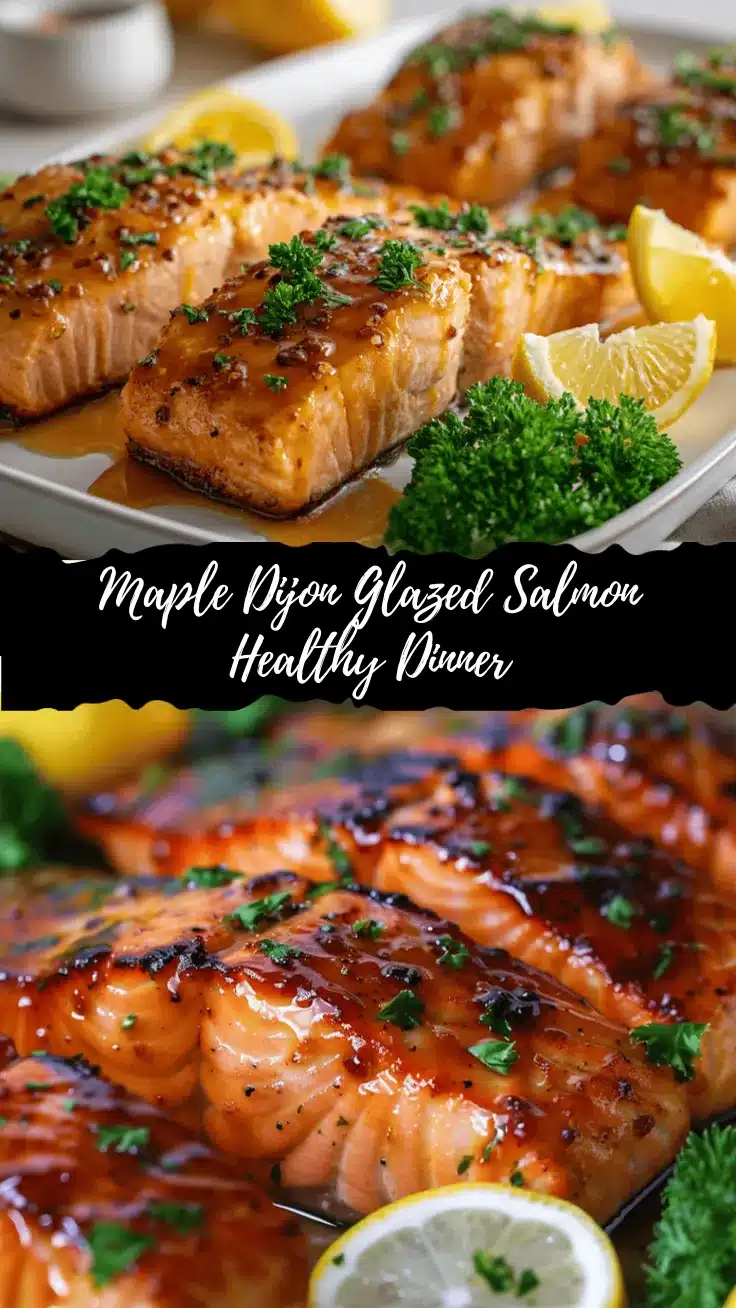
Maple Dijon Glazed Baked Salmon

This Maple Dijon Glazed Baked Salmon is a quick, healthy, and flavorful dinner featuring a sweet and tangy glaze that caramelizes beautifully in the oven. Perfect for weeknights or entertaining, it delivers restaurant-quality results in under 25 minutes.
- Prep Time: 10 minutes
- Cook Time: 12-15 minutes
- Total Time: 22-25 minutes
- Yield: 4 servings 1x
- Category: Main Course
- Cuisine: American
Ingredients
- 4 salmon fillets (6 oz each, skinless or skin-on)
- 3 tablespoons pure maple syrup
- 2 tablespoons Dijon mustard
- 1 tablespoon fresh lemon juice
- 2 cloves garlic, minced
- 1 tablespoon olive oil
- 1/2 teaspoon salt
- 1/4 teaspoon black pepper
- Chopped fresh parsley or dill, for garnish (optional)
- Lemon zest, for garnish (optional)
- Toasted walnuts or pecans, for garnish (optional)
Instructions
- Preheat your oven to 400°F (200°C). Line a baking sheet with parchment paper or foil for easy cleanup.
- In a small mixing bowl, whisk together maple syrup, Dijon mustard, lemon juice, minced garlic, olive oil, salt, and black pepper until smooth.
- Place the salmon fillets on the prepared baking sheet, skin-side down if applicable. Pat dry with a paper towel.
- Brush or spoon the maple dijon glaze generously over each fillet, covering the tops and sides. Reserve a tablespoon or two of glaze for later. Let sit for 5 minutes if possible.
- Bake for 12–15 minutes, depending on thickness, until the salmon flakes easily with a fork and is just opaque in the center.
- For a caramelized finish, broil for 1–2 minutes at the end, watching closely to avoid burning.
- Remove from oven and let rest for 2–3 minutes. Brush with reserved glaze and garnish with fresh herbs, lemon zest, or toasted nuts if desired.
- Serve immediately, spooning any extra glaze from the pan over the top.
Notes
For best results, use fresh salmon and real maple syrup. Let the glaze sit on the salmon for a few minutes before baking for deeper flavor. Watch closely if broiling to avoid burning the glaze. Leftovers are delicious cold or reheated gently. Double-check Dijon mustard for gluten if sensitive.
Nutrition
- Serving Size: 1 salmon fillet (about 6 oz)
- Calories: 320
- Sugar: 10
- Sodium: 500
- Fat: 15
- Saturated Fat: 2
- Carbohydrates: 13
- Protein: 28
Keywords: salmon, maple dijon, baked salmon, healthy dinner, easy salmon recipe, weeknight dinner, gluten-free, omega-3, quick dinner, fish recipe