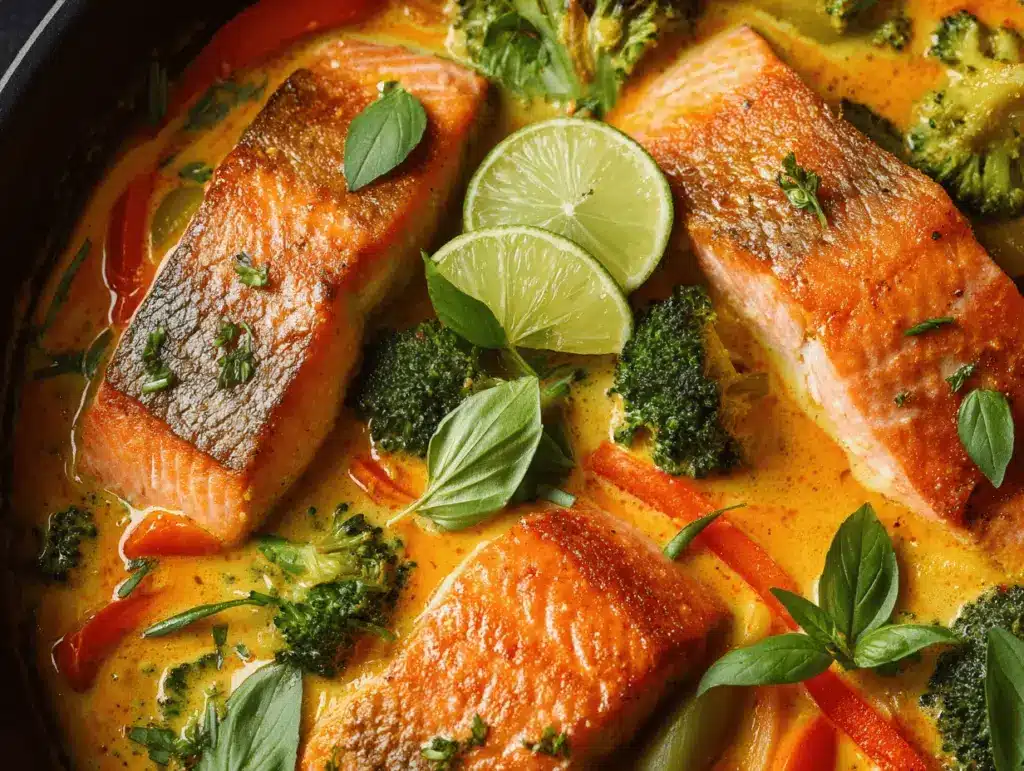
Steam rises, fragrant and a little spicy, from a bubbling pot of salmon coconut curry—honestly, it’s the kind of aroma that makes everyone in the house wander into the kitchen, asking, “What is that amazing smell?” I still remember the first time I tasted a Thai-inspired salmon coconut curry at a tiny local spot. It was one of those “eyes-closed, slow-chew” moments that sticks with you. I knew right then I had to try recreating it at home.
Fast forward a few years and, after lots of tinkering, this salmon coconut curry recipe has become a weeknight dinner staple in my kitchen. It’s bright, creamy, and rich, but also surprisingly easy—like, under 40 minutes from fridge to table easy. Perfect for those nights when you want something comforting, a little fancy, but don’t have the energy for anything complicated. And the best part? This curry is loaded with omega-3s, colorful veggies, and all the cozy Thai flavors you crave.
If you’re like me—a big fan of bold flavors, but not so much a fan of takeout prices or mystery ingredients—this salmon coconut curry brings restaurant-quality to your own table. Whether you’re cooking for your family, impressing friends, or just need to shake up your dinner routine, you’re going to love how simple and satisfying this dish is. Oh, and if you’re into meal prep or leftovers (who isn’t?), this curry is even better the next day. I’ve tested more versions of this recipe than I can count, and I can honestly say this one is the keeper. Let’s get into it!
Why You’ll Love This Salmon Coconut Curry Recipe
- Quick & Easy: This salmon coconut curry comes together in under 40 minutes—truly a lifesaver for busy weeknights or those times you just can’t with complicated recipes.
- Simple Ingredients: No special trips to international markets required; you probably have everything you need (or easy swaps!) in your kitchen already.
- Weeknight Hero: With minimal prep and just one pan, this curry is perfect for last-minute dinners, impromptu guests, or meal prepping for tomorrow’s lunch.
- Crowd-Pleaser: My picky eater niece devours this curry every single time. It’s creamy, not too spicy, and packed with flavor—kids and adults both ask for seconds.
- Unbelievably Delicious: The combination of rich coconut milk, zesty lime, and tender salmon makes this curry next-level comfort food. It’s the kind of meal that makes you slow down and savor every bite.
What really sets this salmon coconut curry apart? For one, blending the curry paste with coconut milk right at the start ensures a super-smooth, deeply flavored sauce. I also use a splash of fish sauce and a squeeze of fresh lime at the end (don’t skip them!)—they add complexity and that unmistakable Thai zing. Over the years, I’ve tried everything from baking the salmon separately to simmering it whole, but gently poaching bite-sized pieces right in the sauce is the way to go—ultra-tender, always juicy, and never overcooked. If you’re craving something that tastes like a treat but doesn’t require a culinary degree, this is the Thai-inspired weeknight dinner to add to your rotation. Trust me, your taste buds (and your dishwasher) will thank you.
What Ingredients You Will Need
This recipe uses simple, wholesome ingredients to deliver big flavor and a silky, satisfying texture—without any fuss. Most of these are pantry staples, and there’s plenty of room for swaps if you’re missing something.
- For the Curry:
- Salmon fillets, skinless, cut into 1.5-inch chunks (about 1.25 lbs/570g; wild-caught for best flavor, but farm-raised works too)
- Coconut milk, full-fat (1 can/13.5 oz or 400ml; I like Thai Kitchen or Aroy-D for creamy results)
- Red curry paste (2–3 tablespoons; Maesri or Thai Kitchen brands—start with less if you’re spice-shy)
- Yellow onion, medium, thinly sliced (for sweetness and depth)
- Garlic cloves, minced (3 large; don’t skimp!)
- Fresh ginger, peeled and grated (1 tablespoon; adds warmth and zing)
- Red bell pepper, thinly sliced (for color and crunch)
- Carrots, julienned or sliced thin (2 small; optional but I love the sweetness they add)
- Baby spinach or kale, handful (about 2 cups/60g; wilts in at the end for extra greens)
- Fish sauce (1 tablespoon; Red Boat is my go-to for a clean, deep flavor. If you’re vegetarian, you can sub in soy sauce or coconut aminos.)
- Brown sugar or coconut sugar (1 teaspoon; balances the heat and acidity)
- Fresh lime juice (from 1 lime; brightens everything up)
- Salt and pepper (to taste)
- For Garnish:
- Fresh cilantro or Thai basil, chopped
- Extra lime wedges
- Thinly sliced red chili (optional, for extra heat and color)
- Toasted coconut flakes (optional, for crunch)
- For Serving:
- Steamed jasmine rice or coconut rice (you can use brown rice, cauliflower rice, or even quinoa for a twist)
Ingredient Tips: If fresh salmon isn’t available, frozen fillets (thawed overnight) work perfectly. For the curry paste, check the ingredient list if you’re sensitive to shellfish. You can use light coconut milk, but the sauce will be a little thinner. Want more veggies? Snap peas, green beans, or zucchini are all tasty additions. And if you need it gluten-free, just make sure your fish sauce and curry paste are labeled as such.
Equipment Needed
- Large deep skillet or Dutch oven: A 12-inch skillet or a 4-quart Dutch oven gives you enough space for everything to simmer without crowding. I’ve used both; the Dutch oven keeps the heat nice and even, but a regular skillet is great if you’re in a hurry.
- Sharp chef’s knife and cutting board: For prepping the salmon and veggies. If you’ve got a favorite non-slip board, now’s the time to use it.
- Microplane grater: For ginger and garlic—saves time and gets a finer zest.
- Measuring cups and spoons: For those curry paste and coconut milk measurements (no guessing, please!).
- Wooden spoon or heatproof spatula: For stirring without scratching your pan.
- Medium pot: If you’re making rice. A rice cooker works too—mine’s been a trusty sidekick for years.
Pro Tip: If you don’t have a Dutch oven, a heavy-bottomed soup pot works. Just avoid thin, lightweight pans—they can scorch the curry. When cleaning up, soak any coconut milk residue in hot soapy water before scrubbing—makes it so much easier!
How to Make Salmon Coconut Curry – Step by Step
-
Prep the Salmon and Veggies (10 minutes):
Pat the salmon fillets dry with paper towels. Cut into 1.5-inch (4cm) chunks, season lightly with salt and pepper, and set aside.
Slice the onion and bell pepper, mince the garlic, and grate the ginger. If using carrots, julienne or thinly slice them. Rinse and roughly chop the spinach or kale. -
Sauté Aromatics (5 minutes):
Heat 1 tablespoon (15ml) of neutral oil in your skillet or Dutch oven over medium heat. Add the sliced onion and cook for 2–3 minutes until translucent and fragrant.
Stir in the garlic and ginger. Cook for another minute, stirring often. Don’t let the garlic brown—it gets bitter fast! -
Bloom the Curry Paste (2 minutes):
Add 2–3 tablespoons (30–45g) red curry paste to the pan. Stir constantly for 1–2 minutes until the paste darkens slightly and smells toasty—this step deepens the flavor. -
Add Coconut Milk and Veggies (2 minutes):
Pour in the full can (13.5 oz/400ml) of coconut milk, scraping up any browned bits stuck to the pan. Stir until the curry paste is fully dissolved.
Add bell pepper and carrots (if using). Bring to a gentle simmer. -
Simmer and Season (8–10 minutes):
Reduce the heat to medium-low. Stir in 1 tablespoon (15ml) fish sauce and 1 teaspoon (4g) brown or coconut sugar. Let the curry simmer gently for 8–10 minutes—vegetables should be just tender, and sauce slightly thickened.
Taste and adjust: add more fish sauce for salt, a pinch of sugar for sweetness, or a splash of water if the sauce gets too thick. -
Poach the Salmon (6–8 minutes):
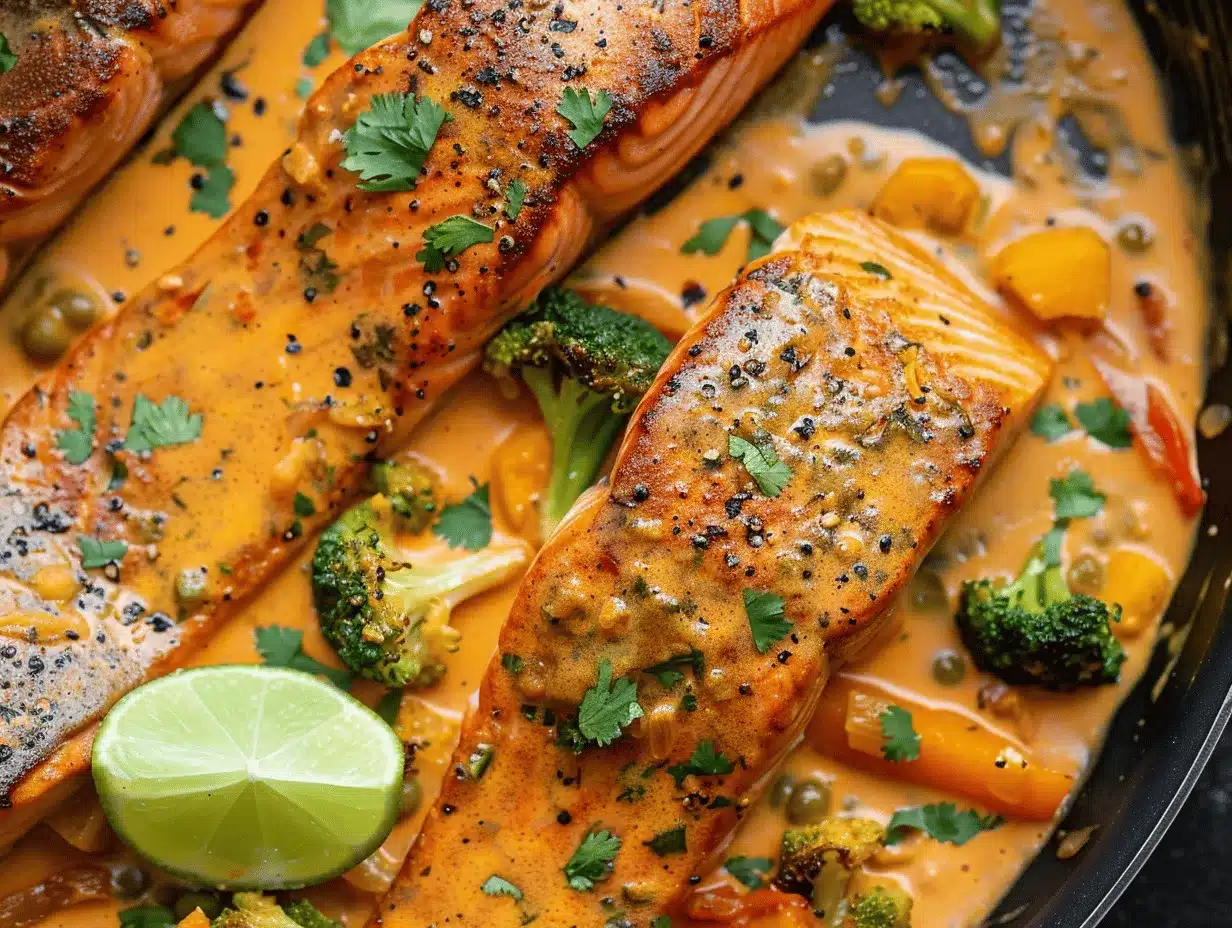
Nestle the salmon chunks into the simmering sauce in a single layer. Spoon a bit of sauce over the top.
Simmer gently (don’t let it boil!) for 6–8 minutes, or until salmon is opaque and flakes easily with a fork. Stir in the spinach or kale during the last 2 minutes so it wilts. -
Finish and Serve (2 minutes):
Turn off the heat. Squeeze in the juice from 1 fresh lime. Taste again—add a pinch of salt or another splash of lime if you like.
Spoon the curry over hot rice. Sprinkle with chopped cilantro or Thai basil, extra lime wedges, and sliced chili or coconut flakes if you want a little extra flair!
Troubleshooting: If the sauce splits (you see oily spots), just whisk in a splash of hot water. Salmon overcooked? Try using slightly larger chunks next time, or lower the heat.
Cooking Tips & Techniques
- Don’t rush the curry paste: Blooming it in oil for a minute or two is the secret to deep, complex flavor. Skipping this step leaves your sauce tasting flat (I learned the hard way!).
- Keep the simmer gentle: Letting the sauce boil hard can toughen the salmon and make the coconut milk split. Low and slow wins the race here.
- Veggie timing matters: Add firmer veggies like carrots and bell peppers early, but save spinach or kale for the end. Overcooked greens lose their color and texture fast.
- Use fresh lime juice: Bottled juice just doesn’t cut it. The bright acidity from a fresh lime makes the whole dish sing. I’ve tried both—trust me, fresh is best.
- Multitasking: While the curry simmers, start your rice. If you’re using a rice cooker, get it going before you start the curry so everything’s ready at once!
- Taste and tweak: Thai-inspired curries are all about balance—sweet, salty, spicy, sour. Don’t be afraid to adjust the seasoning at the end until it tastes perfect to you.
I’ve had my share of fails—like forgetting to pat the salmon dry (hello, mushy fish!) or dumping in too much curry paste at once. Take your time, don’t stress, and have fun with it. The more you make this, the better it gets!
Variations & Adaptations
- Dairy-Free & Gluten-Free: This salmon coconut curry is naturally dairy-free and gluten-free if you use certified products (just check your curry paste and fish sauce labels).
- Lower-Carb: Swap the rice for cauliflower rice, zucchini noodles, or simply serve the curry as a stew with extra veggies like broccoli or snap peas.
- Spicy Lovers: Add sliced Thai bird’s eye chilies or a pinch of red pepper flakes to the sauce. Or, use a spicier curry paste for an extra kick.
- Vegetarian/Vegan: Replace salmon with tofu cubes or chickpeas, and use soy sauce instead of fish sauce. Add extra veggies like mushrooms or eggplant for heartiness (I’ve tried this version for plant-based friends—total hit!).
- Alternate Proteins: Try shrimp, white fish (like cod or halibut), or even chicken breast. Adjust poaching time as needed: shrimp cooks super fast, while chicken takes a bit longer.
- Seasonal Twist: In summer, toss in fresh cherry tomatoes or green beans; in winter, add roasted butternut squash or sweet potatoes for depth and sweetness.
I once made this with leftover grilled salmon and a handful of baby bok choy—honestly, it turned out so good, I’ve kept it in my rotation ever since.
Serving & Storage Suggestions
Serving: Serve your salmon coconut curry hot over fluffy jasmine or coconut rice, with extra lime wedges and fresh cilantro or Thai basil on top. For a pretty presentation, sprinkle with chopped scallions and a few thin chili slices. If you want to go all out, pair it with a crisp cucumber salad or some quick-pickled carrots on the side. For drinks, Thai iced tea or a cold lager is always a win.
Storage: Leftover curry keeps beautifully in an airtight container in the fridge for up to 3 days. The flavors actually deepen overnight—so it’s even better for lunch the next day! To freeze, cool completely and store in a freezer-safe container for up to 2 months. Thaw in the fridge overnight before reheating.
Reheating: Warm gently on the stovetop over low heat, adding a splash of water or coconut milk if needed to loosen the sauce. Avoid boiling, as it can overcook the salmon. The microwave works too (just cover and stir halfway through).
Nutritional Information & Benefits
This salmon coconut curry is a nutritional powerhouse. Each serving (about 1/4 of the recipe, without rice) packs approximately 380 calories, 22g protein, 24g healthy fats, and 10g carbs. Salmon is loaded with omega-3 fatty acids for heart and brain health, while coconut milk provides creamy texture and healthy fats. You’re also getting plenty of vitamins and antioxidants from the colorful veggies.
Dietary notes: This recipe is naturally gluten-free and dairy-free (just double-check labels). For a lower-carb meal, skip the rice or use cauliflower rice. Allergens: contains fish. If sensitive to fish sauce or shellfish, use soy sauce or coconut aminos. I love that this meal leaves me feeling satisfied but not weighed down—a perfect balance of comfort and nutrition.
Conclusion
If you’re looking for a dinner that’s easy, nourishing, and absolutely bursting with flavor, this salmon coconut curry is the answer. It’s a dish that feels special enough for guests but simple enough for any old Tuesday. I keep coming back to this recipe because it’s fast, flexible, and always a hit—plus, it’s a great way to get more healthy fish and veggies into your week.
Don’t be afraid to play around with the veggies or spice level—make it your own! I hope your family loves this salmon coconut curry as much as mine does. If you give it a try, drop a comment below or share your version on social media (tag me so I can see your gorgeous curry bowls!).
Happy cooking, and here’s to more delicious, stress-free weeknight dinners!
FAQs about Salmon Coconut Curry
Can I use frozen salmon for this curry?
Absolutely! Just thaw the salmon overnight in the fridge, pat it dry, and proceed as directed. Frozen works just as well as fresh for this curry.
How spicy is this salmon coconut curry?
With 2–3 tablespoons of red curry paste, it’s mild-to-medium. If you’re spice-sensitive, start with 1 tablespoon and add more to taste. You can always add fresh chilies at the end for extra heat!
What can I substitute for fish sauce?
Soy sauce or coconut aminos both work well for a vegetarian or allergy-friendly option. It won’t have quite the same depth, but your curry will still be delicious.
Can I make this curry ahead of time?
Definitely! The flavors deepen as it sits. Store in the fridge for up to 3 days. Reheat gently on the stove or in the microwave, adding a splash of coconut milk if needed.
Is this salmon coconut curry gluten-free?
Yes, as long as your curry paste and fish sauce are gluten-free (most are, but check the labels). Serve with gluten-free rice or quinoa for a totally gluten-free meal.
Pin This Recipe!
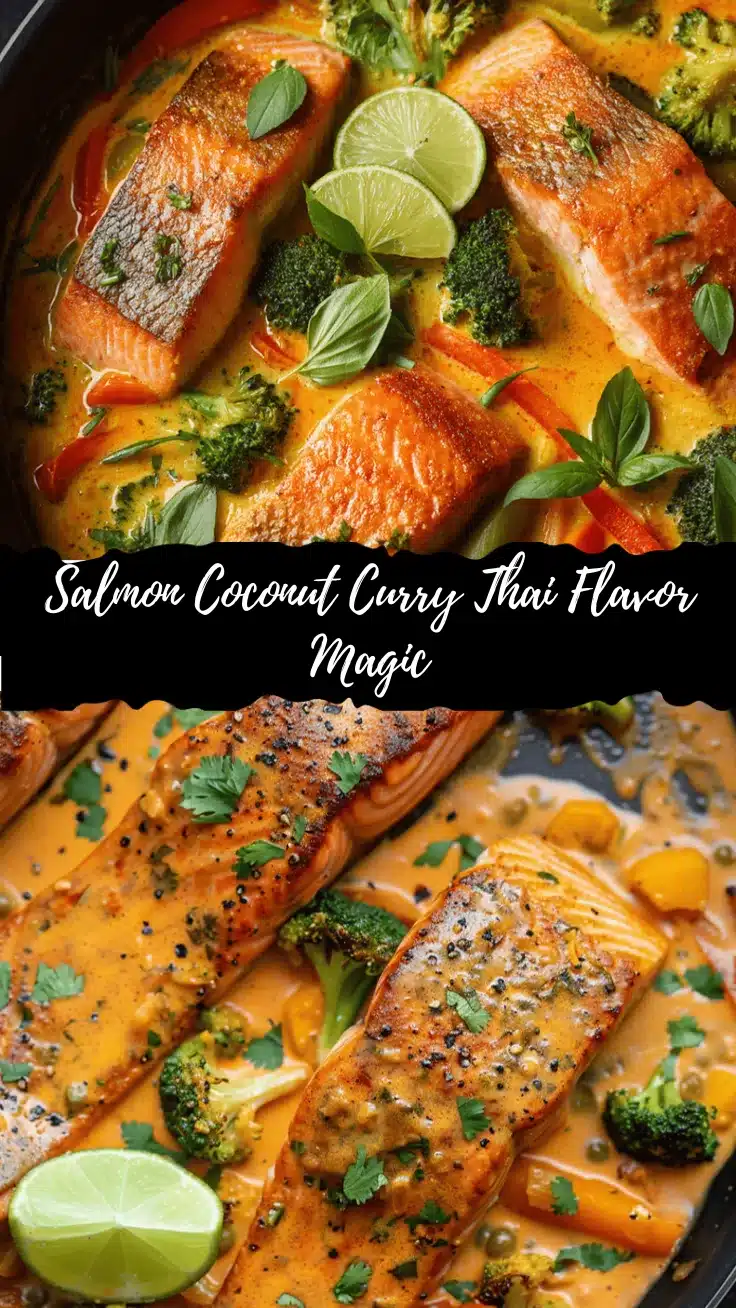
Salmon Coconut Curry

This Thai-inspired salmon coconut curry is a quick, creamy, and flavorful weeknight dinner packed with omega-3s, colorful veggies, and cozy Thai flavors. Ready in under 40 minutes, it’s perfect for busy nights and even better as leftovers.
- Prep Time: 15 minutes
- Cook Time: 22 minutes
- Total Time: 37 minutes
- Yield: 4 servings 1x
- Category: Main Course
- Cuisine: Thai-Inspired
Ingredients
- 1.25 lbs (570g) skinless salmon fillets, cut into 1.5-inch chunks
- 1 (13.5 oz) can full-fat coconut milk
- 2–3 tablespoons red curry paste
- 1 medium yellow onion, thinly sliced
- 3 large garlic cloves, minced
- 1 tablespoon fresh ginger, peeled and grated
- 1 red bell pepper, thinly sliced
- 2 small carrots, julienned or thinly sliced (optional)
- 2 cups (about 2 oz) baby spinach or kale, roughly chopped
- 1 tablespoon fish sauce (or soy sauce/coconut aminos for vegetarian)
- 1 teaspoon brown sugar or coconut sugar
- Juice of 1 fresh lime
- Salt and pepper, to taste
- 1 tablespoon neutral oil (for sautéing)
- For garnish: chopped fresh cilantro or Thai basil, extra lime wedges, thinly sliced red chili (optional), toasted coconut flakes (optional)
- For serving: steamed jasmine rice or coconut rice (or brown rice, cauliflower rice, or quinoa)
Instructions
- Pat salmon fillets dry and cut into 1.5-inch chunks. Season lightly with salt and pepper; set aside.
- Slice onion and bell pepper, mince garlic, grate ginger, and prep carrots and greens as needed.
- Heat 1 tablespoon oil in a large deep skillet or Dutch oven over medium heat. Add onion and cook 2–3 minutes until translucent.
- Add garlic and ginger; cook 1 minute, stirring often.
- Stir in red curry paste and cook 1–2 minutes until fragrant and slightly darkened.
- Pour in coconut milk, scraping up any browned bits. Stir until curry paste is fully dissolved.
- Add bell pepper and carrots. Bring to a gentle simmer.
- Reduce heat to medium-low. Stir in fish sauce and sugar. Simmer 8–10 minutes until veggies are just tender and sauce thickens slightly. Taste and adjust seasoning.
- Nestle salmon chunks into the sauce in a single layer. Spoon sauce over the top. Simmer gently (do not boil) for 6–8 minutes, until salmon is opaque and flakes easily. Stir in spinach or kale during the last 2 minutes to wilt.
- Turn off heat. Squeeze in lime juice. Taste and adjust salt, lime, or sugar as needed.
- Serve curry over hot rice. Garnish with cilantro or Thai basil, extra lime wedges, sliced chili, and coconut flakes if desired.
Notes
Blooming the curry paste in oil deepens the flavor. Keep the simmer gentle to avoid overcooking the salmon or splitting the coconut milk. Add firmer veggies early and greens at the end. Taste and adjust for the perfect balance of sweet, salty, spicy, and sour. Leftovers taste even better the next day.
Nutrition
- Serving Size: About 1/4 of the recipe (without rice)
- Calories: 380
- Sugar: 5
- Sodium: 800
- Fat: 24
- Saturated Fat: 14
- Carbohydrates: 10
- Fiber: 2
- Protein: 22
Keywords: salmon coconut curry, Thai curry, weeknight dinner, easy salmon recipe, coconut milk curry, gluten-free, dairy-free, healthy curry, fish curry, meal prep