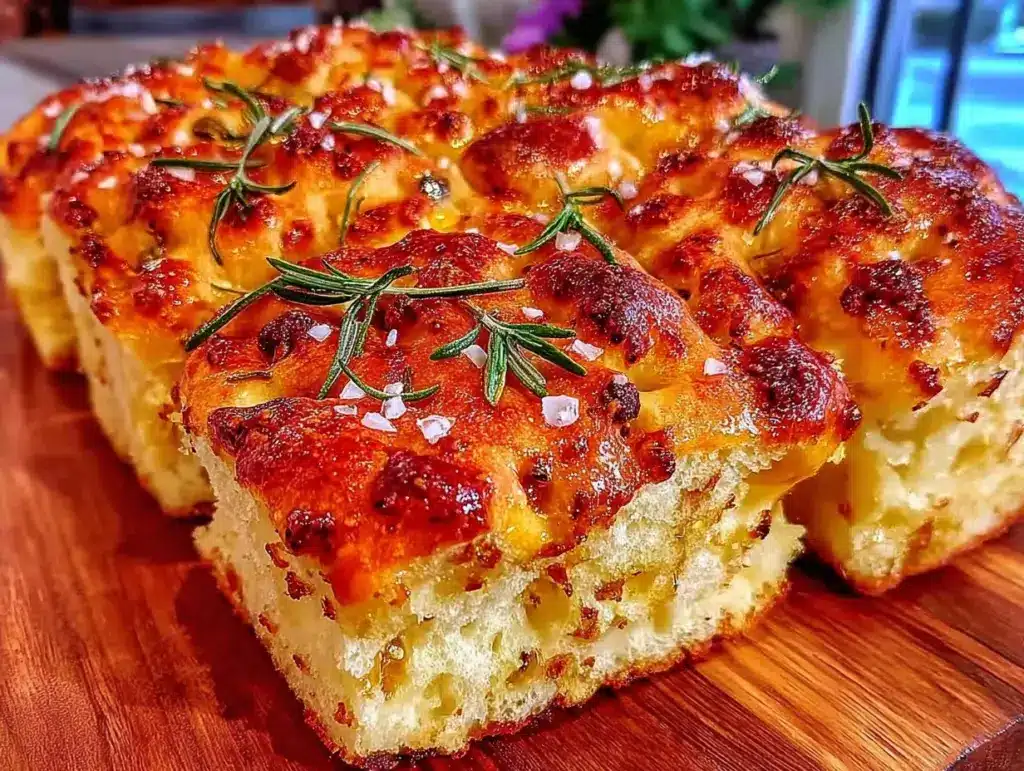
It was a chilly Saturday afternoon, and my kitchen smelled faintly of pine from the rosemary growing on the windowsill. I was scrolling through my usual list of weekend baking plans when I realized I’d never quite nailed focaccia bread at home. I’d tried before—twice, actually—but both times, the crust ended up either too soggy or way too dense. Finally, after testing this focaccia bread with rosemary recipe more than 15 times, I cracked it. Crispy on the outside, soft and airy on the inside, and bursting with that fresh, aromatic rosemary flavor. And the best part? This recipe is easy to make with pantry staples and takes under two hours, including rise time.
This focaccia bread with rosemary recipe for homemade delight is my go-to whenever I want something impressive but not complicated. It’s a little crispy, a little chewy, and that rosemary topping makes it irresistible. I’ve made it for Sunday dinners, weeknight sides, and even for casual gatherings. After years of perfecting it, I finally have a foolproof method that works every single time.
Plus, you don’t need any fancy equipment or weird ingredients. Just flour, yeast, olive oil, and a handful of rosemary from your garden or local market. Once you try this, you’ll wonder why you ever bought focaccia from the store. I’m excited for you to try it!
Why You’ll Love This Recipe
This focaccia bread with rosemary recipe has completely changed how I approach homemade bread. I’ve served it to my family on busy weeknights and to friends on lazy weekend brunches. Everyone asks for seconds, and it’s become a staple at our table.
- Perfectly Crispy Crust — The secret is the right olive oil drizzle and a hot oven, which gives you a golden, crispy crust that’s just the right amount of crunch without being brittle.
- Fluffy Inside — Thanks to a long, slow rise, the bread develops beautiful air pockets that make it light and chewy, not dense or heavy like some homemade focaccias can be.
- Simple Ingredients — You probably have everything on hand already: all-purpose flour, yeast, olive oil, salt, and fresh rosemary. No complicated pantry raids necessary.
- Aromatic Rosemary — Fresh rosemary scattered on top before baking infuses the bread with a piney, fragrant aroma that fills your kitchen and makes the bread taste like it came from an Italian bakery.
- Versatile for Any Occasion — Whether it’s a quick weeknight dinner side, a casual snack for a gathering, or paired with a warm bowl of soup on a cold day, this focaccia fits the bill.
This recipe is a reliable crowd-pleaser for everything from weeknight family dinners to weekend get-togethers. No tricky techniques or odd ingredients—just dependable, delicious bread that elevates any meal.
Ingredients
Here’s the best part: you probably have most of these already in your kitchen. I’m pretty picky about a few ingredients here, and I’ll tell you why as we go.
- All-purpose flour (3 ½ cups / 420g) — The backbone of the bread. You can swap half for bread flour for a chewier texture, but regular all-purpose works great and is budget-friendly.
- Active dry yeast (2 ¼ teaspoons / 1 packet) — This gets the dough rising nice and fluffy. Instant yeast works too if that’s what you have.
- Warm water (1 ½ cups / 360ml) — Warm, not hot. Around 105°F (40°C) is perfect to activate the yeast without killing it.
- Olive oil (⅓ cup + 2 tablespoons / 80ml + 30ml) — Use good quality extra virgin for the dough and a bit more for drizzling on top. It’s key for the crispy crust and flavor.
- Sea salt (1 ½ teaspoons + coarse for topping) — Sea salt adds a nice crunch on top and enhances the flavor throughout.
- Fresh rosemary (2 tablespoons, chopped) — Fresh is a must here. Dried rosemary loses too much aroma and can be tough.
Equipment Needed
You don’t need anything fancy for this. Here’s what I actually use:
- Large mixing bowl — For mixing and proofing the dough. Glass or stainless steel works best.
- Baking sheet or rimmed pan (about 9×13 inches) — I prefer a rimmed sheet pan so the dough has room to spread and the oil doesn’t drip everywhere.
- Kitchen towel or plastic wrap — To cover the dough while it rises and keep it from drying out.
- Measuring cups and spoons — Accurate measurements make a huge difference with yeast baking.
- Optional but useful: Dough scraper — Helps with folding and transferring dough, but a spatula works fine too.
How to Make Focaccia Bread with Rosemary for Homemade Delight: Step by Step

Alright, let’s get into it. I’ll walk you through exactly how I make this focaccia bread with rosemary, including the small tricks that actually make a difference.
- Step 1: Activate the yeast (5 minutes)
Pour the warm water into your mixing bowl, sprinkle the active dry yeast over the surface, and add 1 teaspoon of sugar or honey if you have it (this helps jumpstart the yeast). Let it sit for 5 minutes until it becomes foamy and smells yeasty. If nothing happens, your yeast might be dead—start over with fresh yeast. - Step 2: Mix the dough (5 minutes)
Add the flour, 1 ½ teaspoons sea salt, and ⅓ cup olive oil to the yeast mixture. Stir with a wooden spoon or your hand until it forms a shaggy dough. It will be sticky, and that’s exactly what you want—it means the bread will be light and airy. - Step 3: Knead the dough (8–10 minutes)
Turn the dough onto a lightly floured surface and knead until smooth and elastic. You’ll feel it change texture, becoming less sticky and more stretchy. This develops the gluten, which traps air and helps the bread rise. - Step 4: First rise (1 to 1 ½ hours)
Lightly oil a large bowl, place your dough inside, and cover it with a kitchen towel or plastic wrap. Set it somewhere warm but not hot. The dough should double in size—this slow rise is what creates those lovely air pockets inside the bread. - Step 5: Shape and second rise (30 minutes)
Oil your baking sheet generously. Transfer the dough onto it and stretch it out gently with your fingers until it covers the pan. Don’t stress if it’s uneven—that’s part of the rustic charm. Cover again and let it rise for 30 minutes. Preheat your oven to 450°F (230°C) while waiting. - Step 6: Add rosemary, salt, and olive oil
Using your fingertips, poke deep dimples all over the dough. This is classic focaccia. Sprinkle chopped rosemary and a pinch of coarse sea salt over the top, then drizzle the remaining olive oil generously over everything. The oil pools in the dimples and crisps up perfectly during baking. - Step 7: Bake (20–25 minutes)
Place your focaccia in the preheated oven and bake until golden brown and crispy on top. You’ll know it’s done when it sounds hollow when tapped on the bottom and the edges pull away slightly from the pan. - Step 8: Cool and serve
Let the focaccia cool for 10 minutes on a wire rack before slicing. This resting time helps the crumb set without getting gummy.
Total time: about 2 hours, but most of that is hands-off rising. Active work is under 30 minutes.
Expert Tips & Tricks
Here’s everything I’ve figured out from making this focaccia bread with rosemary recipe dozens of times. These tips will save you from the mistakes I already made.
- Don’t skimp on the olive oil
The oil isn’t just for flavor—it’s what makes the crust crispy and golden. Drizzle generously and don’t be shy with that final coat before baking. - Be gentle with the dough
When shaping, use your fingertips to stretch gently instead of rolling with a rolling pin. This keeps the air pockets intact for a fluffy interior. - Use fresh rosemary only
Dried rosemary is too harsh and can be bitter. Fresh rosemary adds that piney aroma and a subtle bite that makes the bread special. - Let the dough rise slowly
A slow rise (warm but not hot environment) allows better gluten development and flavor. If your kitchen is cold, try placing the dough in the oven with just the light on. - Salt your focaccia twice
A little salt in the dough itself and a sprinkle on top before baking gives balanced flavor and that satisfying crunch. - Beware the #1 Mistake: Dense, doughy bread
The biggest failure point is under-proofing the dough or handling it too roughly. If your focaccia feels heavy or gummy, it likely needed more rising time or gentler shaping. Patience is key.
Variations & Substitutions
Once you’ve got the base version down, here’s how I mix it up. I’ve actually tried all of these.
- Garlic and Herb Focaccia
Add 2 cloves minced garlic along with the rosemary before baking. It amps up the aroma and makes a perfect side for soups or my creamy lemon chicken piccata pasta. - Cheesy Focaccia
Sprinkle shredded mozzarella or Parmesan over the top along with rosemary before baking. It’s a hit for casual weeknight dinners or a cozy snack. - Lighter Version
Use half the olive oil in the dough and just a drizzle on top for a less oily focaccia. It’s still crisp but less rich for those watching calories. - Gluten-Free
Use a gluten-free flour blend designed for bread baking. The texture won’t be exactly the same, but it still tastes great with rosemary and olive oil. - For a Crowd
Double the recipe and bake in a large sheet pan. Perfect for holiday gatherings or potluck parties where everyone can grab a slice.
These variations make this focaccia bread a versatile choice for everything from casual weeknight meals to holiday entertaining.
Serving & Storage
I usually serve this focaccia straight from the baking sheet to keep it rustic and warm. It pairs beautifully with almost any meal—try it alongside a vibrant salad or a hearty stew.
- Garlic bread (obviously)—never skip this if you’re serving it as a side! Just rub a cut clove over warm slices and drizzle with olive oil.
- Simple green salad with balsamic vinaigrette—keeps the meal light and fresh.
- Roasted vegetables like broccoli or Brussels sprouts—makes the meal feel a bit more virtuous.
Storage:
- Fridge: Store in an airtight container or wrapped in foil for up to 4 days. The crust will soften but the flavor holds.
- Reheating: Best is a quick warm-up in a skillet over low heat with a tiny splash of olive oil. This crisps up the crust again in about 5 minutes. Microwave works okay but softens the crust.
- Freezing: Not recommended. The texture suffers, and focaccia is best fresh or refrigerated.
Nutrition Information
I’m not a nutritionist, but here’s the breakdown if you’re keeping track. This is based on 8 servings.
| Calories | Protein | Carbs | Fiber | Sugar | Fat | Saturated Fat | Sodium |
|---|---|---|---|---|---|---|---|
| 230 | 5g | 32g | 2g | 1g | 8g | 1g | 250mg |
Look—this is comfort food made with olive oil and fresh herbs. Not a diet recipe, and I’m not pretending it is. But it’s way better than store-bought, costs less, and I know exactly what’s in it. When I want something lighter, I pair it with a big salad or my Greek chicken gyro bowl. Most nights though? I make the real thing and enjoy every crispy, aromatic bite.
Final Thoughts
Remember that chilly Saturday afternoon when I first finally nailed this focaccia? Every time I bake it now, I’m reminded of how satisfying it is to create something so simple yet so delicious at home. The crispy crust, the fragrant rosemary, the soft crumb—it’s pure comfort.
Make it yours. Add more rosemary if you love the aroma like I do. Toss in some olives or sun-dried tomatoes if you’re feeling fancy. Pair it with your favorite soups or dips—or even alongside my Mediterranean stuffed chicken for a full meal.
If you try this focaccia bread with rosemary recipe, drop a comment and tell me how it went. And if something goes sideways, let me know—I genuinely want to help you troubleshoot. That’s what the comments are for.
Happy cooking—I hope your kitchen smells amazing.
Frequently Asked Questions
Q: Can I make this focaccia bread with rosemary without yeast?
A: No, yeast is essential for that classic airy texture and rise. I’ve tried baking it without yeast (using baking powder instead), and it turns out dense and more like flatbread. If you want a quicker version, try a garlic pull-apart bread instead.
Q: Why did my focaccia turn out soggy or dense?
A: This usually happens when the dough hasn’t risen enough or the oven temperature is too low. Make sure you give the dough time to double in size and preheat your oven fully to 450°F (230°C). Also, don’t skip the olive oil drizzle—it helps crisp up the crust.
Q: Can I make this focaccia ahead for a holiday dinner?
A: Yes! You can prepare the dough the night before and refrigerate it after the first rise. Let it come to room temperature and do the second rise before baking. This makes it perfect for holiday gatherings when you want fresh bread without last-minute stress.
Q: Is this focaccia bread recipe gluten-free or dairy-free?
A: The base recipe is not gluten-free, but you can use a gluten-free flour blend for baking if needed. It’s naturally dairy-free since it uses olive oil instead of butter or milk, making it suitable for most dairy-free diets.
Q: Can I double or halve this recipe?
A: Yes, absolutely. Just keep the same ratios and adjust your baking sheet size accordingly. For a double batch, use a larger pan or two pans. For half, a smaller pan works fine but keep an eye on baking time—it might be shorter.
Q: What’s the best way to add flavor variations to this focaccia?
A: Fresh herbs like thyme or oregano work great instead of rosemary. You can also add caramelized onions, olives, or sun-dried tomatoes on top. I’ve found that garlic adds an amazing kick when minced and sprinkled before baking.
Q: How do I keep the focaccia from drying out after baking?
A: Store it in an airtight container or wrapped tightly in foil. Reheat gently in a skillet with a bit of olive oil to refresh the crust. Avoid the microwave if you want to keep it crispy.
Pin This Recipe!

Focaccia Bread with Rosemary

A crispy on the outside, soft and airy on the inside focaccia bread bursting with fresh rosemary flavor. Easy to make with pantry staples and perfect for any occasion.
- Prep Time: 20 minutes
- Cook Time: 20-25 minutes
- Total Time: 2 hours
- Yield: 8 servings 1x
- Category: Bread
- Cuisine: Italian
Ingredients
- 3 ½ cups (420g) all-purpose flour
- 2 ¼ teaspoons (1 packet) active dry yeast
- 1 ½ cups (360ml) warm water (around 105°F / 40°C)
- ⅓ cup + 2 tablespoons (80ml + 30ml) extra virgin olive oil
- 1 ½ teaspoons sea salt + coarse sea salt for topping
- 2 tablespoons fresh rosemary, chopped
Instructions
- Activate the yeast: Pour warm water into a mixing bowl, sprinkle active dry yeast over the surface, add 1 teaspoon sugar or honey if available, and let sit for 5 minutes until foamy.
- Mix the dough: Add flour, 1 ½ teaspoons sea salt, and ⅓ cup olive oil to the yeast mixture. Stir until a shaggy, sticky dough forms.
- Knead the dough: Turn dough onto a lightly floured surface and knead for 8–10 minutes until smooth and elastic.
- First rise: Lightly oil a large bowl, place dough inside, cover with a kitchen towel or plastic wrap, and let rise in a warm place for 1 to 1 ½ hours until doubled in size.
- Shape and second rise: Oil a 9×13 inch rimmed baking sheet, transfer dough and stretch to cover the pan. Cover and let rise for 30 minutes. Preheat oven to 450°F (230°C).
- Add rosemary, salt, and olive oil: Poke deep dimples all over dough, sprinkle chopped rosemary and coarse sea salt, then drizzle remaining olive oil generously.
- Bake: Place focaccia in preheated oven and bake for 20–25 minutes until golden brown and crispy. It should sound hollow when tapped on the bottom.
- Cool and serve: Let cool on a wire rack for 10 minutes before slicing.
Notes
[‘Use fresh rosemary only for best aroma and flavor.’, ‘Drizzle olive oil generously to achieve a crispy crust.’, ‘Be gentle when stretching dough to preserve air pockets.’, ‘Let dough rise slowly in a warm, not hot, environment.’, ‘Salt the dough and top for balanced flavor and crunch.’, ‘If dough is dense or gummy, it likely needs more rising time or gentler handling.’, ‘For a lighter version, reduce olive oil in dough by half and drizzle less on top.’, ‘Gluten-free flour blend can be used but texture will differ.’, ‘Store focaccia in airtight container for up to 4 days; reheat in skillet with olive oil to crisp crust.’]
Nutrition
- Serving Size: 1 slice (1/8 of foca
- Calories: 230
- Sugar: 1
- Sodium: 250
- Fat: 8
- Saturated Fat: 1
- Carbohydrates: 32
- Fiber: 2
- Protein: 5
Keywords: focaccia, rosemary bread, homemade bread, crispy crust, easy focaccia, Italian bread, olive oil bread