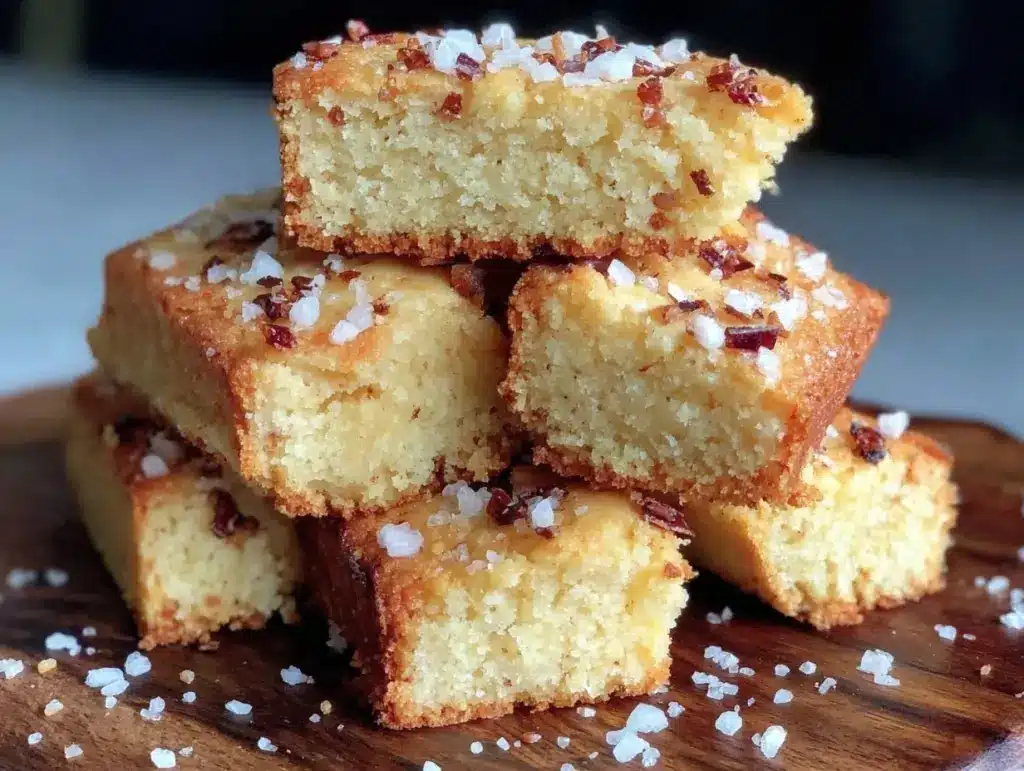
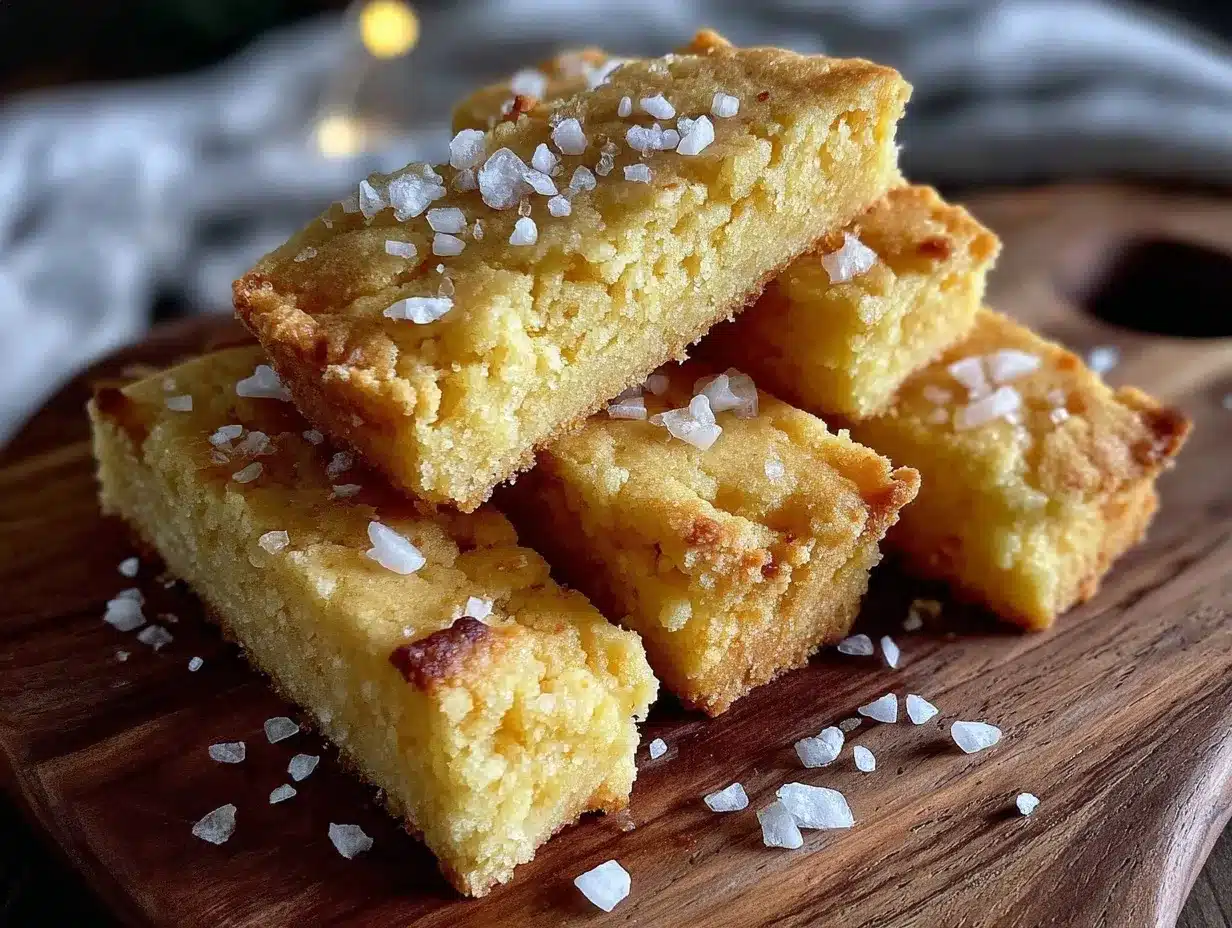
“You sure these are shortbread?” my friend asked, peering skeptically at the rustic fingers cooling on my kitchen rack. Honestly, I’d whipped them up on a whim after raiding my pantry for something sweet but simple. I wasn’t expecting a fuss, just a quiet snack to nibble on during my late-night reading. But the moment I bit into one of these buttery Scottish shortbread fingers with sea salt, I paused. There was this gentle crunch, a melt-in-your-mouth tenderness, and then—just the faintest kiss of flaky salt that made the whole thing come alive. It was like a little secret tucked inside a humble cookie.
I started baking these treats a few weeks ago, inspired by a dusty old cookbook I found at a flea market. The recipe was straightforward, nothing fancy, but the results surprised me. I ended up making them over and over that month, handing them out to neighbors, sneaking bites during work breaks, even pairing them with tea for a weekend treat. What stuck with me was how effortless it was to create something so satisfying from just a handful of ingredients and a bit of patience.
These shortbread fingers became my go-to when I needed a small moment of calm or a little sweetness without fuss. No complicated steps, no weird ingredients—just buttery dough, a sprinkle of sea salt, and a touch of old-fashioned charm. And honestly, that subtle salt finish? It’s what makes these stand out, turning a classic into something quietly memorable. I guess sometimes the simplest things have the biggest impact, and that’s why these buttery Scottish shortbread fingers with sea salt have found a permanent spot in my baking repertoire.
Why You’ll Love This Buttery Scottish Shortbread Fingers Recipe with Sea Salt
If you’ve ever been skeptical about making shortbread at home, this recipe might just change your mind. After testing countless batches, tweaking ratios, and trying different salts, I’m confident this version strikes the perfect balance. Here’s why this recipe has earned a permanent spot in my kitchen:
- Quick & Easy: This recipe comes together in under 30 minutes, perfect when you want a fresh homemade treat without fussing for hours.
- Simple Ingredients: You probably have everything at home already—just butter, sugar, flour, and a sprinkle of sea salt.
- Perfect for Any Occasion: Whether you’re serving afternoon tea, prepping for a holiday gathering, or just craving a cozy snack, these shortbread fingers fit right in.
- Crowd-Pleaser: I’ve shared these with friends and family, and they always ask for the recipe again (and again).
- Unbelievably Delicious: The buttery richness paired with the crunchy texture and sea salt makes every bite a little moment of joy.
What sets this recipe apart isn’t just the classic shortbread base, but the special touch of flaky sea salt sprinkled on top before baking. It cuts through the richness beautifully and adds a surprising savory note that elevates these fingers beyond ordinary cookies. Plus, the technique of gently pressing the dough to just the right thickness ensures they bake evenly with that iconic crumbly texture.
This isn’t just another shortbread recipe—it’s the one I trust to impress guests without stressing out, and to comfort me on rainy afternoons. It’s that quiet, buttery hug you didn’t know you needed.
What Ingredients You Will Need
This recipe uses simple, wholesome ingredients to deliver bold flavor and satisfying texture without the fuss. Most are pantry staples, and substitutions are easy if you need them.
- Unsalted butter, softened (use good-quality butter like Kerrygold for best flavor)
- Granulated sugar (regular white sugar works perfectly; you can substitute with coconut sugar for a deeper flavor)
- All-purpose flour (sifted before measuring to avoid lumps; for gluten-free option, try a 1:1 gluten-free baking flour)
- Sea salt flakes (like Maldon or fleur de sel; this adds that signature salty crunch on top)
- Vanilla extract (optional, but a splash adds subtle warmth)
You don’t need anything fancy—no eggs, no baking powder—just the basics that come together in a buttery, crumbly dough. If you’re feeling adventurous, a pinch of ground cardamom or lemon zest can add a nice twist, but the classic simplicity is what makes these shortbread fingers truly special.
Equipment Needed
- Mixing bowl (medium size)
- Measuring cups and spoons (precise measurements help with texture)
- Wooden spoon or silicone spatula for mixing
- Baking tray or sheet pan, preferably rimmed
- Parchment paper or silicone baking mat to prevent sticking
- Rolling pin or your hands to press the dough evenly
- Sharp knife or bench scraper for cutting the fingers
If you don’t have a rolling pin, your hands work just fine to press the dough into shape. I sometimes use a flat-bottomed glass to even out the surface. Nothing fancy required! Also, lining your pan with parchment paper makes cleanup a breeze.
Preparation Method
- Preheat your oven to 325°F (163°C). This lower temperature helps the shortbread bake evenly without browning too fast. Line your baking tray with parchment paper.
- Cream the butter and sugar. In your mixing bowl, beat together 1 cup (227g) of unsalted butter (softened) and ½ cup (100g) granulated sugar until pale and fluffy. This takes about 2-3 minutes with a wooden spoon or electric mixer.
- Add vanilla extract (optional). Stir in 1 teaspoon of vanilla extract to add warmth, but it’s fine to skip if you prefer pure butter flavor.
- Mix in the flour. Gradually add 2 cups (240g) of sifted all-purpose flour. Use a spatula or your hands to combine gently—avoid overworking the dough, or it can become tough.
- Press the dough into the pan. Transfer the crumbly dough to your parchment-lined tray. Use your fingers or a flat-bottomed glass to press it evenly into a roughly 8×8 inch (20×20 cm) square about ½ inch (1.3 cm) thick. The dough will feel soft but should hold together.
- Score the dough. Using a sharp knife or bench scraper, lightly score the dough into finger-sized rectangles about 1 inch (2.5 cm) wide and 4 inches (10 cm) long. This helps break the shortbread after baking without crumbling it too much.
- Sprinkle sea salt. Generously scatter flaky sea salt over the top—this is the magic touch that balances the sweetness.
- Bake for 25-30 minutes. The shortbread should be pale golden and firm to the touch but not browned. Keep an eye toward the end to avoid overbaking.
- Cool completely. Remove from oven and let cool in the pan for 10 minutes, then transfer to a wire rack. Break along the scored lines into fingers once fully cooled.
Pro tip: If your dough feels too crumbly, a teaspoon of cold water helps bind it. And don’t rush the cooling step—shortbread needs to firm up to get that crumbly texture we love.
Cooking Tips & Techniques
Getting the texture right with shortbread can be a bit of a balancing act, but a few tricks make all the difference:
- Use cold butter for creaminess. Softened butter is fine, but avoid melted butter—it changes the texture and makes shortbread greasy.
- Don’t overmix. Once flour is added, mix just enough to bring the dough together. Overworking develops gluten and toughens the cookies.
- Press evenly. Uneven thickness leads to some fingers baking too crispy while others remain soft.
- Keep the oven temperature steady. A lower temp like 325°F (163°C) helps shortbread bake through without burning the edges.
- Use flaky sea salt, not table salt. The large crystals provide bursts of saltiness and texture that elevate the flavor.
I’ve had batches turn out crumbly beyond repair when rushing the cooling or cutting too soon. Trust me, letting the shortbread rest and cool fully before breaking makes all the difference. And if you ever feel like mixing things up, adding a teaspoon of cornstarch to the flour gives a meltier crumb.
Variations & Adaptations
Here are some ways to make these buttery Scottish shortbread fingers with sea salt your own:
- Herb-Infused: Add finely chopped rosemary or lavender to the dough for a fragrant twist that pairs beautifully with the salt.
- Chocolate-Dipped: Once cooled, dip one end of the shortbread fingers in melted dark chocolate and let set for a rich contrast.
- Gluten-Free: Swap the all-purpose flour for a 1:1 gluten-free baking blend. The texture will be slightly different, but still delicious.
- Lemon Zest: Stir in a teaspoon of fresh lemon zest to brighten the buttery flavor.
One time, I tried a batch with a sprinkle of crushed pink peppercorns on top instead of sea salt—unexpected but surprisingly addictive! If you want a lower sugar version, reduce the sugar slightly and add a dash of almond extract for sweetness.
Serving & Storage Suggestions
These shortbread fingers are best enjoyed at room temperature with a warm cup of tea or coffee. Their buttery texture and salty crunch make them a perfect companion for quiet afternoons or casual gatherings.
You can store them in an airtight container at room temperature for up to a week, although they rarely last that long in my house. For longer storage, freeze the fingers in a sealed container or bag for up to 3 months. Thaw at room temperature before serving.
Reheating isn’t necessary, but if you like a warm treat, pop them in a 300°F (150°C) oven for 3-5 minutes to refresh the crispness. The flavors mellow and meld beautifully over time, so leftovers can taste even better the next day.
For a special touch, serve alongside clotted cream or a dollop of homemade lemon curd for contrast. If you enjoy the balance of sweet and savory, pairing these shortbread fingers with a rich, creamy dessert or even alongside a savory dish like a classic protein-packed pasta salad can be surprisingly delightful.
Nutritional Information & Benefits
Each shortbread finger (about 1 inch by 4 inches) contains roughly:
| Nutrient | Amount |
|---|---|
| Calories | 110 kcal |
| Fat | 7 g (mostly from butter) |
| Carbohydrates | 11 g |
| Sugar | 4 g |
| Protein | 1 g |
While shortbread is definitely an indulgence, using quality unsalted butter provides beneficial fats and vitamins like A and E. The sea salt adds trace minerals that enhance flavor naturally without excess sodium. For those avoiding gluten, the recipe adapts well with gluten-free flour blends.
From a wellness perspective, this treat reminds me that balance is key—enjoying a buttery, satisfying cookie every now and then is part of a happy, realistic approach to eating.
Conclusion
These buttery Scottish shortbread fingers with sea salt are proof that simplicity can bring real joy. They’re easy enough for weekday treats but special enough to share when company drops by. What I love most is how just a few ingredients, handled with care, create something that feels both timeless and a little bit special.
Feel free to tweak the flavors and textures to fit your taste—after all, the best recipes are the ones you make your own. If you’ve enjoyed the buttery comfort of these shortbread fingers, you might also appreciate the delightful simplicity of peanut butter blossoms cookies for another classic homemade treat.
Give this recipe a try, and let me know how your batch turns out. There’s something so satisfying about sharing a little homemade sweetness, don’t you think?
Frequently Asked Questions
Can I use salted butter instead of unsalted butter?
Yes, but reduce or skip the sea salt topping to avoid making the shortbread too salty.
How do I store shortbread fingers to keep them fresh?
Keep them in an airtight container at room temperature for up to a week or freeze for longer storage.
Can I make the dough ahead of time?
Absolutely! You can refrigerate the dough wrapped in plastic wrap for up to 2 days before baking.
What type of sea salt is best for topping?
Flaky salts like Maldon or fleur de sel add the best texture and flavor contrast.
Can I substitute the all-purpose flour for whole wheat flour?
Yes, but expect a slightly denser and nuttier texture. You might want to combine it with some all-purpose flour for balance.
Pin This Recipe!

Buttery Scottish Shortbread Fingers Recipe with Sea Salt

A simple and classic recipe for buttery Scottish shortbread fingers topped with flaky sea salt, delivering a melt-in-your-mouth texture and a perfect balance of sweet and savory.
- Prep Time: 10 minutes
- Cook Time: 25-30 minutes
- Total Time: 35-40 minutes
- Yield: 16 fingers 1x
- Category: Dessert
- Cuisine: Scottish
Ingredients
- 1 cup (227g) unsalted butter, softened
- 1/2 cup (100g) granulated sugar
- 2 cups (240g) all-purpose flour, sifted
- Sea salt flakes (like Maldon or fleur de sel), for sprinkling
- 1 teaspoon vanilla extract (optional)
Instructions
- Preheat your oven to 325°F (163°C). Line your baking tray with parchment paper.
- In a mixing bowl, beat together the softened unsalted butter and granulated sugar until pale and fluffy, about 2-3 minutes.
- Stir in vanilla extract if using.
- Gradually add sifted all-purpose flour and combine gently with a spatula or hands, avoiding overmixing.
- Transfer the crumbly dough to the parchment-lined tray and press evenly into an 8×8 inch (20×20 cm) square about 1/2 inch (1.3 cm) thick.
- Lightly score the dough into finger-sized rectangles about 1 inch (2.5 cm) wide and 4 inches (10 cm) long using a sharp knife or bench scraper.
- Generously sprinkle flaky sea salt over the top.
- Bake for 25-30 minutes until pale golden and firm to the touch but not browned.
- Cool in the pan for 10 minutes, then transfer to a wire rack to cool completely.
- Break along the scored lines into fingers once fully cooled.
Notes
If dough feels too crumbly, add a teaspoon of cold water to help bind it. Avoid overmixing after adding flour to prevent tough shortbread. Use flaky sea salt for best texture and flavor. Let shortbread cool completely before breaking to maintain crumbly texture. For a meltier crumb, add a teaspoon of cornstarch to the flour.
Nutrition
- Serving Size: 1 shortbread finger
- Calories: 110
- Sugar: 4
- Fat: 7
- Carbohydrates: 11
- Protein: 1
Keywords: shortbread, Scottish shortbread, buttery cookies, sea salt, homemade treats, easy baking, simple ingredients