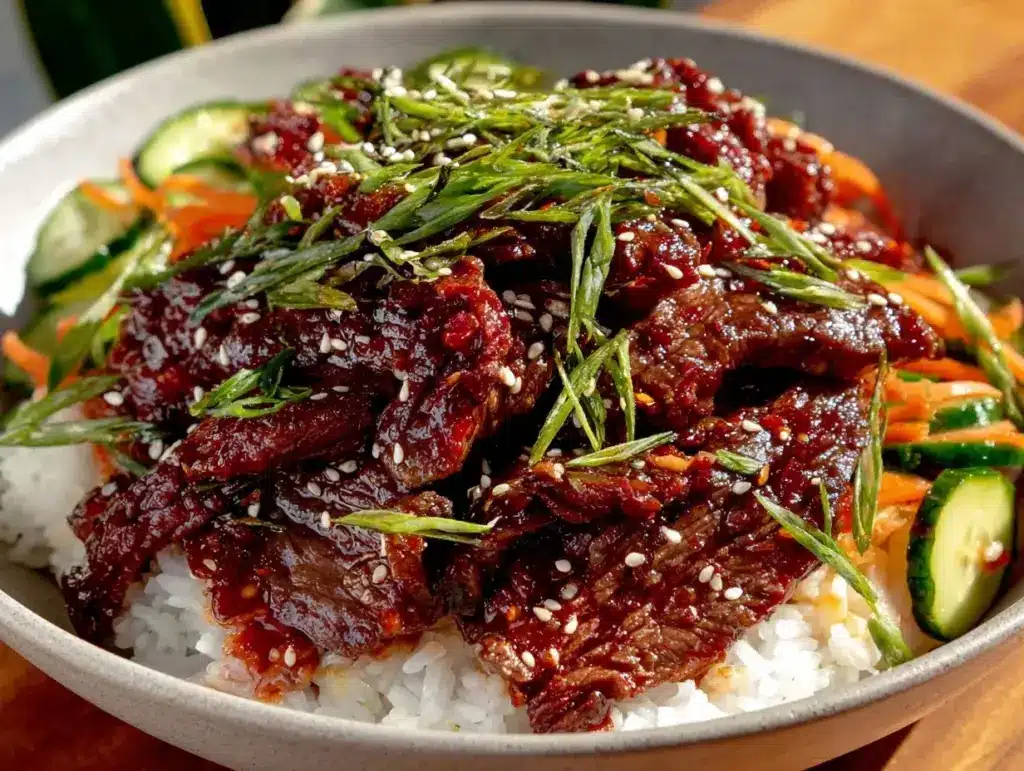
Honestly, I thought mixing gochujang—the spicy Korean chili paste—with ground beef sounded like a mistake until one evening when I needed dinner fast but wanted something with a kick. I’d always been wary of Korean flavors, imagining complicated steps and hard-to-find ingredients. But this Flavorful Korean Beef Bowl with Spicy Gochujang Sauce caught my eye, promising bold flavor with minimal fuss. The first time I made it, I had no big expectations—just a craving for something different and quick.
By the time I scraped the last bite off my plate, I was quietly convinced. The spicy-sweet sauce clung to tender beef, and the heat from the gochujang was just enough to tease the tongue, not overwhelm it. The crunch of fresh veggies and the fragrant rice underneath made each mouthful a little celebration. It wasn’t some fancy dish served at a Korean BBQ joint, but it was honest, hearty, and exactly what I needed.
This bowl stuck with me because it’s one of those meals that feels thoughtfully put together without demanding hours in the kitchen. It’s approachable for anyone who’s curious about Korean flavors but doesn’t want a laundry list of ingredients or complicated techniques. After a few tries, it became one of my go-to dinners when I want something spicy, satisfying, and downright comforting. You know, the kind of meal that makes you pause and appreciate the simple things—like perfectly cooked beef with a sauce that has a personality.
Why You’ll Love This Recipe
This Flavorful Korean Beef Bowl with Spicy Gochujang Sauce is a winner in so many ways, and here’s why it’s earned a permanent spot in my dinner rotation:
- Quick & Easy: Ready in under 30 minutes, it’s perfect for busy weeknights or when you want a tasty meal without fuss.
- Simple Ingredients: Most of these are pantry staples or easy-to-find items at your local grocery store—no specialty trips required.
- Perfect for Casual Dinners: Whether it’s a solo night in or a casual gathering, it’s a crowd-pleaser that feels special without stress.
- Crowd-Pleaser: From kids to adults, the balance of spicy, sweet, and savory flavors gets rave reviews every time.
- Unbelievably Delicious: The gochujang sauce is the star here—it’s spicy, tangy, and a little smoky, making the beef pop with flavor.
- Unique Twist: Unlike other Korean beef recipes, this one blends the boldness of gochujang with a touch of honey and garlic for a flavor profile that’s both authentic and approachable.
Honestly, this recipe isn’t just about making dinner; it’s about discovering a sauce that makes ordinary ground beef sing. It’s the kind of dish that brings a little excitement to the table without making you sweat over the stove. Plus, if you enjoy dishes with layers of flavor and a bit of heat, this bowl will have you closing your eyes after the first bite—promise.
What Ingredients You Will Need
This recipe uses simple, wholesome ingredients that come together to deliver bold flavor and satisfying texture without the fuss. Most are pantry staples, and you can customize a few depending on what’s on hand.
- Ground beef (80/20 or 85/15), about 1 pound (450g) – I prefer 80/20 for juiciness, but leaner works too.
- Gochujang (Korean chili paste), 2 to 3 tablespoons – This is the heart of the sauce. I recommend Chung Jung One brand for the best balance of heat and sweetness.
- Soy sauce, 3 tablespoons – Use low-sodium if you want to control saltiness better.
- Honey, 1 tablespoon – Adds a subtle sweetness to balance the spice.
- Garlic, 3 cloves minced – Fresh is best for that punchy aroma.
- Ginger, 1 teaspoon grated – Optional but highly recommended for depth.
- Sesame oil, 1 teaspoon – Adds a toasty note that ties everything together.
- Green onions, 2 stalks sliced – For garnish and freshness.
- Cooked white rice, 4 cups (about 800g) – Jasmine or short-grain rice both work well.
- Vegetables to serve (optional): shredded carrots, cucumber slices, or kimchi – Adds crunch and brightness.
- Sesame seeds, 1 teaspoon – For garnish and a subtle nutty crunch.
If you can’t find gochujang, you might try a mix of chili paste and miso as a substitute, but it won’t be quite the same. For a gluten-free version, swap soy sauce with tamari. I often add quick-pickled cucumbers for an extra zing, which you can easily whip up in minutes.
Equipment Needed
- Large non-stick skillet or sauté pan – This helps cook the beef evenly without sticking.
- Mixing bowl – For combining the sauce ingredients.
- Measuring spoons and cups – Precision matters when balancing the sauce flavors.
- Sharp knife and cutting board – For prepping garlic, ginger, and green onions.
- Rice cooker or pot with lid – To prepare the rice perfectly.
If you don’t have a non-stick skillet, a well-seasoned cast iron pan works but watch the heat carefully to prevent burning the sauce. For those on a budget, any basic skillet will do, just stir frequently. I keep a small silicone spatula handy for scraping the pan clean—trust me, it saves time and frustration.
Preparation Method
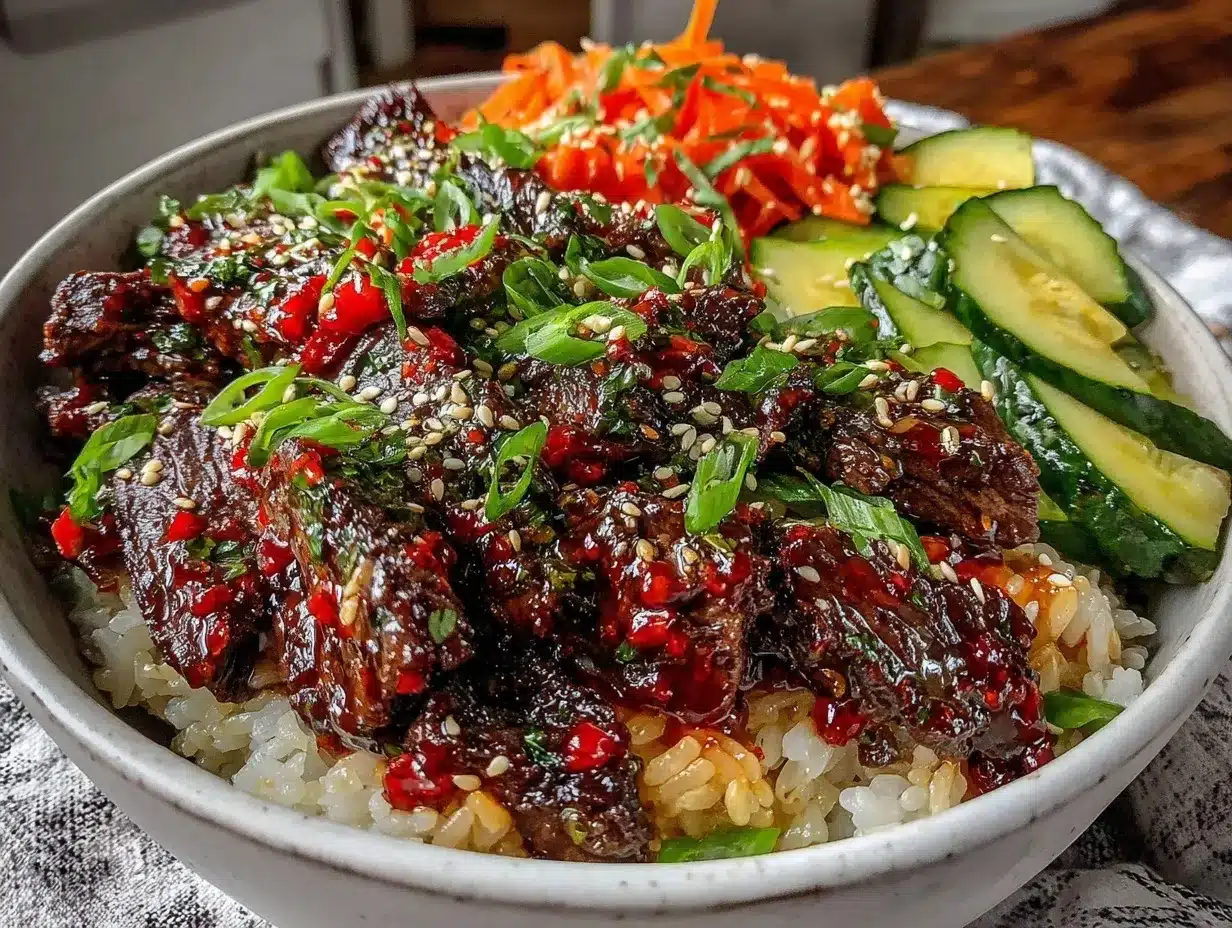
- Cook the rice: Begin by rinsing 2 cups (400g) of jasmine or short-grain rice under cold water until the water runs clear. This removes excess starch and prevents clumping. Cook according to package instructions or use a rice cooker for perfect fluffy rice. Set aside and keep warm. (Time: 20-25 minutes)
- Prepare the sauce: In a mixing bowl, whisk together 2-3 tablespoons gochujang, 3 tablespoons soy sauce, 1 tablespoon honey, 3 cloves minced garlic, 1 teaspoon grated ginger, and 1 teaspoon sesame oil. Taste and adjust sweetness or heat by adding more honey or gochujang if desired. (Time: 5 minutes)
- Cook the beef: Heat a large skillet over medium-high heat. Add the ground beef, breaking it up with a spatula. Cook until browned and no longer pink, about 6-8 minutes. Drain excess fat if necessary. (Tip: Browning the beef properly adds rich flavor, so don’t rush.)
- Add the sauce: Pour the prepared gochujang sauce over the cooked beef. Stir well to coat evenly. Reduce heat to medium-low and let the mixture simmer for 3-5 minutes, stirring occasionally. The sauce should thicken slightly and cling to the beef. (Watch for burning—stir often!)
- Prepare garnishes: While the beef simmers, slice green onions and prepare any veggies you’d like to serve, such as shredded carrots or cucumber slices. Toast sesame seeds lightly in a dry pan for extra aroma if you have time.
- Assemble the bowls: Spoon warm rice into bowls, top generously with the spicy beef mixture. Add fresh veggies or kimchi on the side, sprinkle with green onions and sesame seeds. (Optional: add a fried egg on top for extra richness.)
Quick note: Overcooking the beef can dry it out, so keep an eye on it and remove from heat once the sauce thickens. If the sauce seems too thick, splash a teaspoon or two of water or broth to loosen it up.
Cooking Tips & Techniques
Working with gochujang can be a little intimidating if you haven’t cooked with it before. Here’s what I’ve learned to make this recipe foolproof:
- Balance the heat: Gochujang packs a punch, but it’s also sweet and savory. Mixing honey into the sauce tames the spice without masking it—don’t skip this step.
- Don’t overcook the garlic and ginger: Add them directly into the sauce mix instead of frying separately to avoid bitterness and keep the flavors bright.
- Use fresh ground beef: The recipe works best with freshly ground meat for juicy texture. Frozen beef tends to dry out during cooking.
- Simmer gently: After adding the sauce, lower the heat to let flavors meld without burning the sugars in the sauce.
- Multitasking tip: Start the rice first, then prep the sauce while the beef cooks. This way, everything finishes around the same time.
One time I forgot to rinse my rice, and it turned out sticky and clumpy—lesson learned! Also, I once added too much gochujang thinking it’d be mild; my mouth was on fire for hours. Stick to the measurements here unless you really love heat. And if you want to add a bit of crunch, fresh veggies or quick kimchi on the side bring a whole new texture dimension.
Variations & Adaptations
This recipe is flexible, making it easy to adjust to your tastes or dietary needs:
- Protein swaps: Substitute ground beef with ground turkey, chicken, or even plant-based crumbles for a lighter or vegetarian version.
- Spice level: Tone down the heat by reducing gochujang or mix in a bit of Greek yogurt on the side to cool things off.
- Rice alternatives: Try brown rice, cauliflower rice, or quinoa for different textures and nutritional profiles.
- Veggie add-ins: Toss in sautéed mushrooms, bell peppers, or snap peas during the beef cooking step for extra color and crunch.
- Cooking method: If short on time, cook the beef and sauce in a skillet, then finish under a broiler for a minute or two to caramelize the edges.
I once made this with ground turkey and swapped honey for maple syrup—still fantastic! Also, if you’re curious about more egg ideas alongside this bowl, you might enjoy my soft scrambled eggs recipe which adds a creamy touch to any meal.
Serving & Storage Suggestions
Serve this Korean beef bowl hot, straight from the skillet, with fluffy rice as the base. I like to present it with colorful sides like shredded carrots or cucumber slices for contrast. A fried or poached egg on top adds richness and makes it feel a bit more special.
This dish pairs well with light, crisp beverages like iced green tea or a cold lager to balance the spicy sauce. For something heartier, steamed veggies or a simple kimchi salad complement it beautifully.
Store leftovers in an airtight container in the refrigerator for up to 3 days. Reheat gently in a skillet over medium heat or microwave with a sprinkle of water to keep the sauce from drying out. Flavors often deepen after a day, making leftovers just as satisfying, if not better.
For meal prep ease, you can portion the beef and rice separately to maintain texture. If you want to switch things up, try adding quick pickled veggies before serving to freshen the bowl.
Nutritional Information & Benefits
Estimated per serving (serves 4): 400-450 calories, 25g protein, 35g carbohydrates, 15g fat.
This bowl offers a balanced mix of macronutrients, with protein-packed beef and complex carbs from rice. The gochujang adds antioxidants and capsaicin, which may support metabolism and circulation. Garlic and ginger contribute anti-inflammatory benefits, making this meal not just tasty but nourishing.
Gluten-free options are easy by swapping soy sauce for tamari. For lower-carb needs, cauliflower rice is a great substitute. Note that sesame oil and soy sauce contain allergens, so adjust accordingly if sensitive.
From a wellness standpoint, this dish hits that sweet spot between comfort food and mindful eating—flavors that satisfy without feeling heavy or overly processed.
Conclusion
This Flavorful Korean Beef Bowl with Spicy Gochujang Sauce has become a quiet favorite for busy nights when I want something different but don’t want to fuss. It’s approachable, packed with flavor, and has that perfect spicy-sweet balance that keeps me coming back.
Feel free to make it your own—add more veggies, swap proteins, tweak the heat. That’s the beauty of this recipe: it’s flexible but never bland. Plus, it’s a great way to bring a little Korean-inspired comfort into your kitchen without any stress.
If you try it out, I’d love to hear how you customize it or what sides you serve alongside. Sharing these little kitchen wins always makes cooking more fun. Happy cooking and stay spicy!
Frequently Asked Questions
- What is gochujang, and where can I buy it?
Gochujang is a Korean fermented chili paste that’s spicy, sweet, and savory. You can find it at most Asian grocery stores or online. - Can I make this recipe vegetarian?
Yes! Use plant-based ground beef alternatives or sautéed mushrooms and tofu for a vegetarian twist. - How spicy is this dish?
It has a medium heat level that you can adjust by adding more or less gochujang. The honey helps balance the spice. - What rice works best?
Jasmine or short-grain rice is ideal for texture and flavor, but brown rice or cauliflower rice can be used for different preferences. - Can I prepare this recipe ahead of time?
Absolutely. Cook the beef and sauce, then store separately from rice in the fridge for up to 3 days. Reheat gently before serving.
Pin This Recipe!
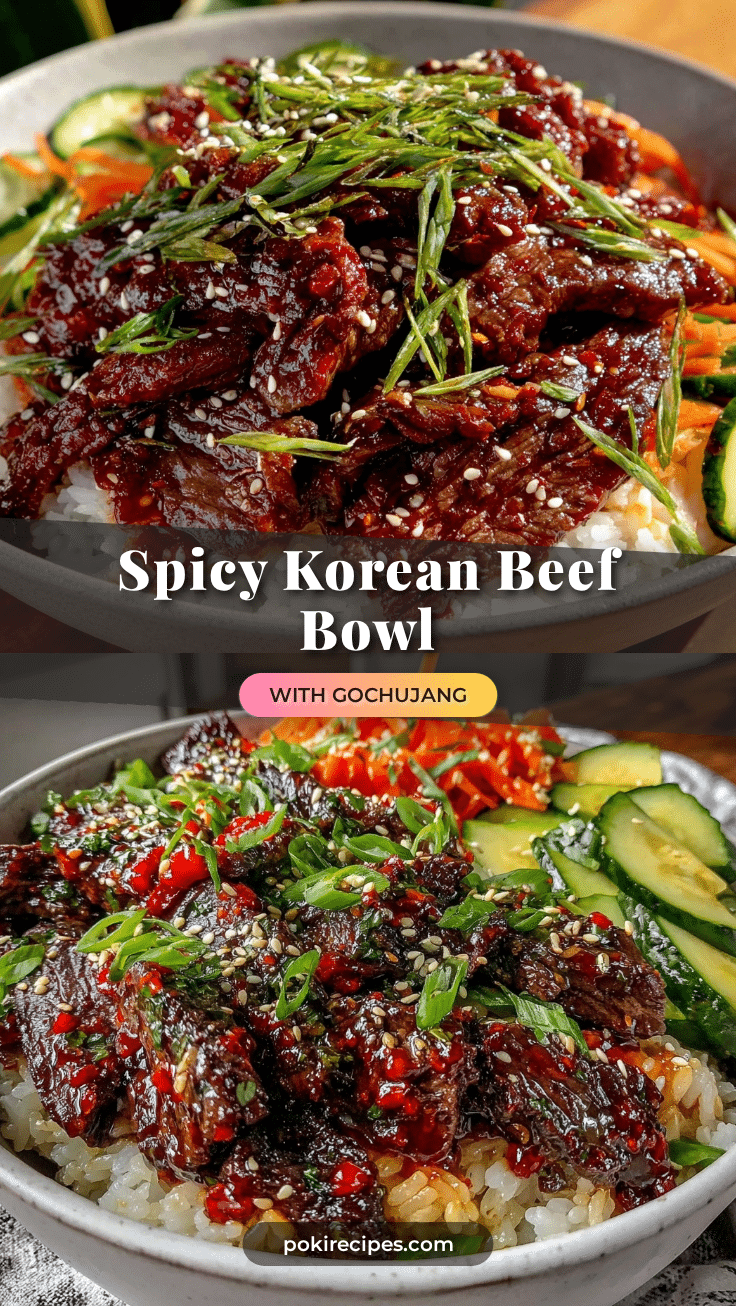
Flavorful Korean Beef Bowl Recipe with Spicy Gochujang Sauce Easy and Delicious

A quick and easy Korean-inspired beef bowl featuring ground beef cooked in a spicy-sweet gochujang sauce, served over fluffy rice with fresh veggies and garnishes.
- Prep Time: 10 minutes
- Cook Time: 20 minutes
- Total Time: 30 minutes
- Yield: 4 servings 1x
- Category: Main Course
- Cuisine: Korean
Ingredients
- 1 pound ground beef (80/20 or 85/15)
- 2 to 3 tablespoons gochujang (Korean chili paste)
- 3 tablespoons soy sauce (low-sodium recommended)
- 1 tablespoon honey
- 3 cloves garlic, minced
- 1 teaspoon grated ginger (optional)
- 1 teaspoon sesame oil
- 2 stalks green onions, sliced
- 4 cups cooked white rice (jasmine or short-grain)
- Vegetables to serve (optional): shredded carrots, cucumber slices, or kimchi
- 1 teaspoon sesame seeds
Instructions
- Cook the rice: Rinse 2 cups (about 14 oz) of jasmine or short-grain rice under cold water until the water runs clear. Cook according to package instructions or use a rice cooker. Set aside and keep warm.
- Prepare the sauce: In a mixing bowl, whisk together 2-3 tablespoons gochujang, 3 tablespoons soy sauce, 1 tablespoon honey, 3 cloves minced garlic, 1 teaspoon grated ginger, and 1 teaspoon sesame oil. Adjust sweetness or heat as desired.
- Cook the beef: Heat a large skillet over medium-high heat. Add the ground beef, breaking it up with a spatula. Cook until browned and no longer pink, about 6-8 minutes. Drain excess fat if necessary.
- Add the sauce: Pour the prepared gochujang sauce over the cooked beef. Stir well to coat evenly. Reduce heat to medium-low and simmer for 3-5 minutes, stirring occasionally until the sauce thickens slightly.
- Prepare garnishes: While the beef simmers, slice green onions and prepare any veggies like shredded carrots or cucumber slices. Toast sesame seeds lightly in a dry pan if desired.
- Assemble the bowls: Spoon warm rice into bowls, top generously with the spicy beef mixture. Add fresh veggies or kimchi on the side, sprinkle with green onions and sesame seeds. Optionally, add a fried egg on top.
Notes
Use low-sodium soy sauce or tamari for gluten-free. Do not overcook the beef to keep it juicy. Adjust gochujang amount to control spice level. Toast sesame seeds for extra aroma. Optionally add a fried egg for richness. Substitute ground beef with turkey, chicken, or plant-based crumbles for variations.
Nutrition
- Serving Size: 1 bowl (approximatel
- Calories: 425
- Sugar: 8
- Sodium: 700
- Fat: 15
- Saturated Fat: 6
- Carbohydrates: 35
- Fiber: 2
- Protein: 25
Keywords: Korean beef bowl, gochujang sauce, spicy beef recipe, quick Korean dinner, ground beef recipe, easy weeknight meal