“Hey, did you try that lemon dessert yet?” my friend asked with a grin last summer, right as I was juggling a dozen things at a backyard party. Honestly, I was skeptical—lemon curd in a pavlova? That sounded like a fancy combo that might not hold up under the heat of a busy afternoon. But curiosity won, and I found myself sneaking bites between chatting and refilling drinks.
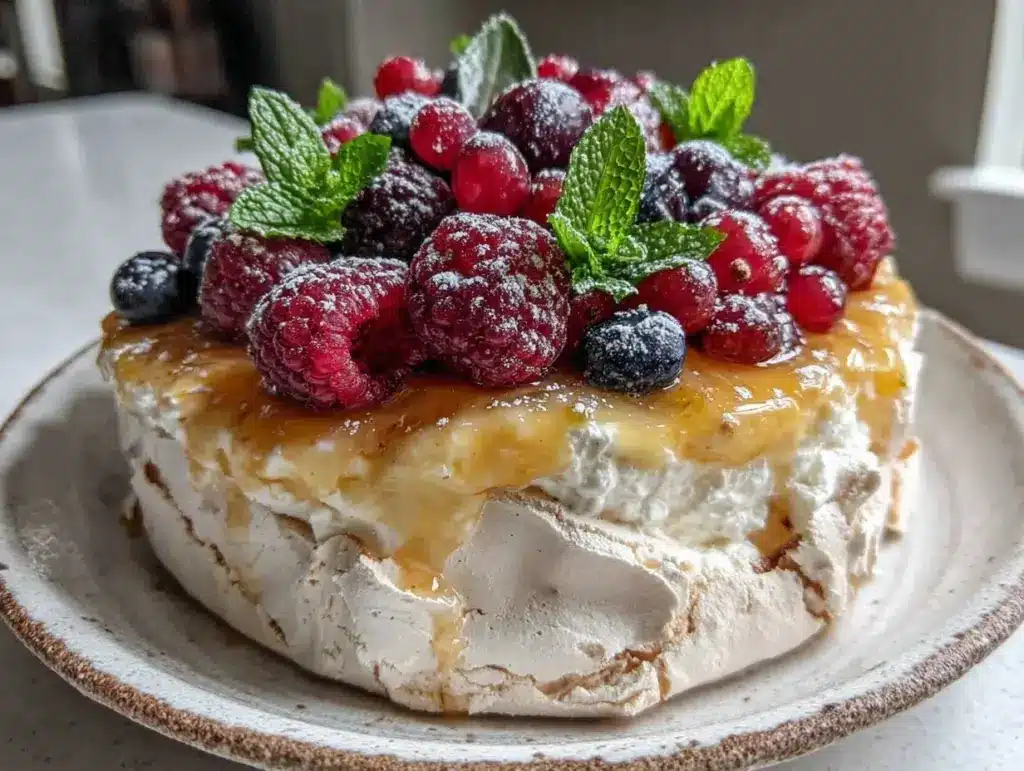
The first thing that hit me was the crisp shell of the pavlova, shattering lightly under my fork. Then the silky, tangy lemon curd spread across my tongue like sunshine in dessert form, balanced perfectly by the sweetness of fresh berries piled on top. It wasn’t just a dessert; it was a moment of summer captured in a bite. That unexpected win turned into a small obsession for me—the kind where I’d make it several times in a week just to feel that burst of brightness again.
What’s funny is that this recipe came from a casual text exchange with a neighbor who swore by lemon curd for “saving” her summer gatherings. I gave it a try, and it stuck around my kitchen like an old friend who always knows how to cheer you up (especially after a long day or a chaotic weekend). No fuss, just a fresh, light dessert that somehow feels both elegant and effortlessly homemade. It’s the kind of recipe that I trust to impress without the stress, and honestly, that’s why I keep coming back to it.
Why You’ll Love This Recipe
After testing this fresh lemon curd pavlova with berries multiple times, I can say it’s become a staple for summer, and here’s why you’ll want it on your dessert list too:
- Quick & Easy: From start to finish, it takes under an hour to prepare, making it perfect when guests drop by unexpectedly or when you crave something fresh and sweet without hours in the kitchen.
- Simple Ingredients: You likely have most of these in your pantry or fridge already—egg whites, sugar, fresh lemons, and berries. No fancy or hard-to-find items here.
- Perfect for Summer Parties: The lightness of the meringue combined with the zing of lemon curd and juicy berries is exactly what you want on a warm day, whether it’s a backyard BBQ or a casual brunch.
- Crowd-Pleaser: Kids, adults, picky eaters, you name it—this dessert gets rave reviews every time. It’s that kind of recipe that prompts second helpings.
- Unbelievably Delicious: The contrast of the crisp pavlova shell with the creamy lemon curd and fresh berries is simply next-level comfort food that still feels fresh and light.
This isn’t just another pavlova tossed together. The lemon curd is made from scratch with just the right balance of tart and sweet, and the meringue is whipped to glossy perfection—no weepy pavlova here. Plus, the berries add a burst of freshness that keeps the whole dessert from feeling heavy. Honestly, it’s my go-to when I want something that tastes fancy but doesn’t require a master chef’s skills.
What Ingredients You Will Need
This recipe uses simple, wholesome ingredients to deliver bold flavor and satisfying texture without fuss. Most are pantry staples, with fresh lemons and berries adding that seasonal touch. Here’s what you’ll gather:
- For the Pavlova:
- 4 large egg whites, room temperature (helps with volume)
- 1 cup (200g) granulated sugar (for that perfect crisp sweetness)
- 1 teaspoon white vinegar (stabilizes the meringue)
- 1 teaspoon cornstarch (adds the classic marshmallowy interior)
- Pinch of salt
- For the Lemon Curd:
- 3 large eggs
- 1 cup (200g) granulated sugar
- 1/2 cup (120ml) freshly squeezed lemon juice (about 3-4 lemons)
- 1 tablespoon lemon zest (for extra zing)
- 6 tablespoons (85g) unsalted butter, cubed and softened (adds richness)
- For the Topping:
- 1 cup mixed fresh berries (strawberries, blueberries, raspberries, blackberries)
- Optional: a few fresh mint leaves for garnish
For the best results, I recommend using organic lemons for the curd if you can—they make the flavor pop without any bitterness. Also, if you want to keep this gluten-free, rest assured pavlova is naturally so. If you’re feeling adventurous, swapping some berries with stone fruits like peaches or nectarines in summer is a delightful twist.
Equipment Needed
- Electric mixer or stand mixer (for whipping the egg whites to stiff peaks)
- Medium saucepan (to cook the lemon curd gently)
- Heatproof bowl (if using a double boiler method for lemon curd)
- Baking sheet lined with parchment paper (to shape and bake the pavlova)
- Spatula (for folding and spreading)
- Fine zester or microplane (for lemon zest)
- Juicer (optional but handy for extracting lemon juice)
If you don’t have a stand mixer, a handheld electric mixer works just fine—just be ready for a little workout whipping those egg whites! For the lemon curd, some like to use a double boiler setup to prevent curdling, but a low heat on the stove with constant stirring works beautifully too. I’ve used both methods and prefer the stovetop for quickness, just keep your eyes on it.
Preparation Method
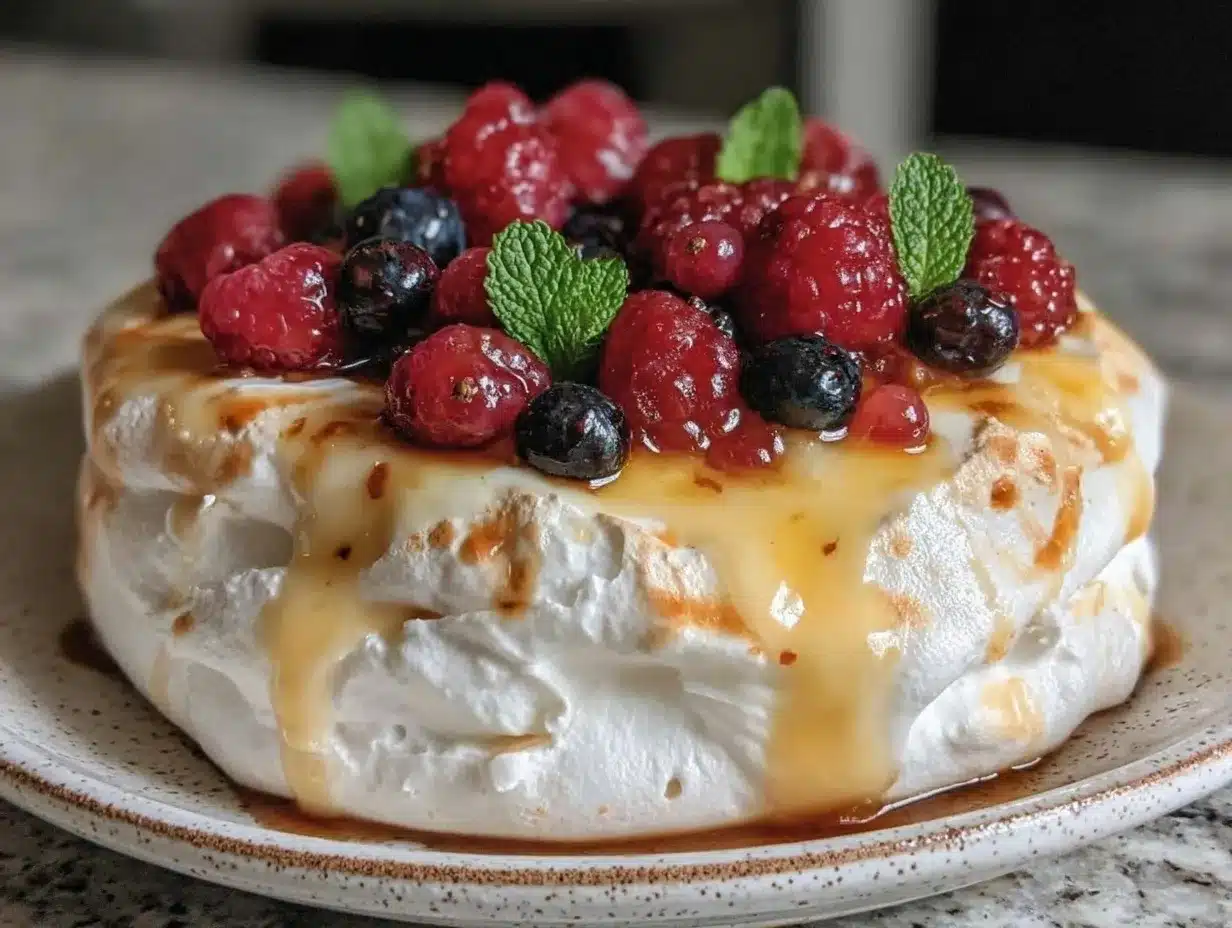
- Prepare the Pavlova Base: Preheat your oven to 275°F (135°C). Line a baking sheet with parchment paper and draw a 7-inch (18 cm) circle to guide your meringue shape.
- In a clean, dry mixing bowl, whisk 4 egg whites with a pinch of salt on medium speed until soft peaks form (about 2-3 minutes).
- Gradually add 1 cup (200g) sugar, one tablespoon at a time, while continuing to whisk on high until the mixture is glossy and stiff peaks form (about 5-7 minutes). Test by rubbing a bit between your fingers to check for sugar granules—if gritty, keep whisking.
- Gently fold in 1 teaspoon vinegar and 1 teaspoon cornstarch using a spatula. This helps the meringue hold its shape and gives it that soft, marshmallowy center.
- Spoon the meringue onto the parchment inside your circle, shaping it with slightly higher edges to hold the lemon curd later. Smooth the top but keep it a bit rustic for that charming homemade look.
- Bake for 60-70 minutes or until the pavlova is crisp on the outside and feels light. Turn off the oven and leave the pavlova inside to cool completely with the door slightly ajar—this prevents cracking.
- Make the Lemon Curd: While the pavlova bakes, whisk together 3 eggs, 1 cup (200g) sugar, 1/2 cup (120ml) lemon juice, and lemon zest in a medium saucepan.
- Place the pan over low heat and cook, stirring constantly, until the mixture thickens enough to coat the back of a spoon (about 8-10 minutes). Avoid boiling to prevent curdling.
- Remove from heat and whisk in the softened butter until smooth. Pour the curd into a bowl and cover with plastic wrap touching the surface to avoid a skin. Chill until ready to use.
- Assemble the Pavlova: Once the pavlova is completely cool, gently transfer it to a serving plate. Spread the chilled lemon curd evenly inside the meringue shell.
- Top with fresh mixed berries and garnish with mint leaves if desired.
- Serve immediately for the best texture contrast!
If you find your pavlova starts to weep or get sticky, it usually means humidity is fighting you—try baking on a dry day or using a dehumidifier nearby. Also, don’t rush the cooling step; a sudden temperature change can cause cracks.
Cooking Tips & Techniques
Getting the perfect pavlova can feel tricky, but a few learned tricks make a huge difference:
- Whip Egg Whites at Room Temperature: They reach maximum volume and whip faster.
- Add Sugar Slowly: This prevents the meringue from collapsing and helps dissolve sugar fully for a smooth finish.
- Use Cornstarch and Vinegar: This combo stabilizes the meringue, giving it that signature marshmallow texture inside.
- Low and Slow Baking: Baking at a low temperature dries out the pavlova without browning it too much—don’t be tempted to crank up the heat!
- Cool Inside Oven: Letting the pavlova cool gradually in the oven helps avoid cracks and shrinkage.
- For Lemon Curd: Stir constantly to prevent lumps and curdling—watch your heat closely, as lemon curd can quickly overcook.
I once tried to speed things up by increasing oven temperature, and the pavlova cracked badly. Learned my lesson! Also, fresh lemon juice makes all the difference; bottled just doesn’t have that same bright zing. If you want to multitask, whip the egg whites while your lemon curd cooks—it saves time and keeps things moving without stress.
Variations & Adaptations
Here are a few ways I’ve tweaked this fresh lemon curd pavlova with berries to suit different tastes and occasions:
- Berry Swap: Use only strawberries or mix in stone fruits like sliced peaches or nectarines for a different summer feel.
- Dietary Adjustments: This recipe is naturally gluten-free and low in fat if you skip the butter in lemon curd (though it’s less rich). For dairy-free, replace butter with coconut oil—flavor changes but still tasty.
- Flavor Twists: Add a teaspoon of vanilla extract or a splash of limoncello to the lemon curd for a grown-up punch.
- Mini Pavlovas: Make individual pavlova nests for a fun presentation—perfect for parties or portion control.
One personal favorite is adding a dollop of whipped cream mixed with a little honey on top, which mellows the tartness and adds creaminess. If you’re interested in other fresh summer desserts, you might enjoy the homemade lemon curd tartlets I made last season.
Serving & Storage Suggestions
This pavlova is best served fresh at room temperature, so the meringue stays crisp and the lemon curd maintains its silky texture. If you need to prepare ahead, bake the pavlova base a day in advance and store it in an airtight container at room temperature away from humidity.
Keep the lemon curd refrigerated until assembly, and add the fresh berries just before serving to prevent sogginess. Leftovers (if you have any!) can be refrigerated for up to 2 days but note the pavlova shell will soften over time.
For reheating, it’s tricky—microwaving will ruin the texture. Instead, enjoy it cold or bring the pavlova out of the fridge about 15 minutes before serving to let the flavors bloom. Pair it with a light sparkling wine or a fresh herbal tea to balance the citrusy sweetness. If you like vibrant salads, a dish like this strawberry spinach salad pairs beautifully for a summer lunch or brunch spread.
Nutritional Information & Benefits
This fresh lemon curd pavlova with berries is a relatively light dessert considering its flavor punch. Here’s an estimate per serving (based on 8 servings):
| Calories | 220 |
|---|---|
| Carbohydrates | 38g |
| Fat | 5g |
| Protein | 3g |
| Fiber | 2g |
The key ingredients bring natural benefits: lemon juice is rich in vitamin C and antioxidants, while berries add fiber and additional vitamins. The pavlova is naturally gluten-free and low in fat if you want to minimize butter in the curd. Just a heads up if you have egg allergies, as this dessert relies heavily on eggs both in meringue and curd.
From a wellness perspective, this dessert feels indulgent but doesn’t weigh you down—a nice balance for those who want something special yet light after a summer meal.
Conclusion
This fresh lemon curd pavlova with berries has become one of those recipes I find myself returning to when I want something bright, beautiful, and reliably delicious. It’s simple enough to make for last-minute plans, but impressive enough to earn compliments every time. Plus, the balance of textures and flavors keeps it from feeling like “just another sweet.”
Feel free to swap berries, tweak the lemon curd to your taste, or make individual nests for a playful twist. I’d love to hear how you make it your own—comments or recipe adaptations are always welcome! Just know that once you try it, it might quietly become your summer party staple too.
Enjoy the fresh zing and sweet crunch, and remember: sometimes the best desserts come from a little spark of curiosity and a well-timed text.
Frequently Asked Questions
Can I make the lemon curd ahead of time?
Yes! Lemon curd can be made up to 3 days in advance and stored in the fridge. Just cover it tightly with plastic wrap to prevent a skin from forming.
What if my pavlova cracks?
Some cracking is normal due to cooling. To minimize it, cool the pavlova gradually in the oven with the door slightly open. Avoid sudden temperature changes.
Can I use frozen berries?
Frozen berries can be used but should be thawed and drained well to prevent making the pavlova soggy. Fresh berries work best for texture.
Is this recipe gluten-free?
Yes, pavlova is naturally gluten-free since it’s made from egg whites and sugar. Just ensure any toppings or additions are gluten-free as well.
How do I store leftover pavlova?
Store the pavlova shell separately in an airtight container at room temperature. Once assembled with lemon curd and berries, store in the fridge and consume within 1-2 days for best texture.
Pin This Recipe!
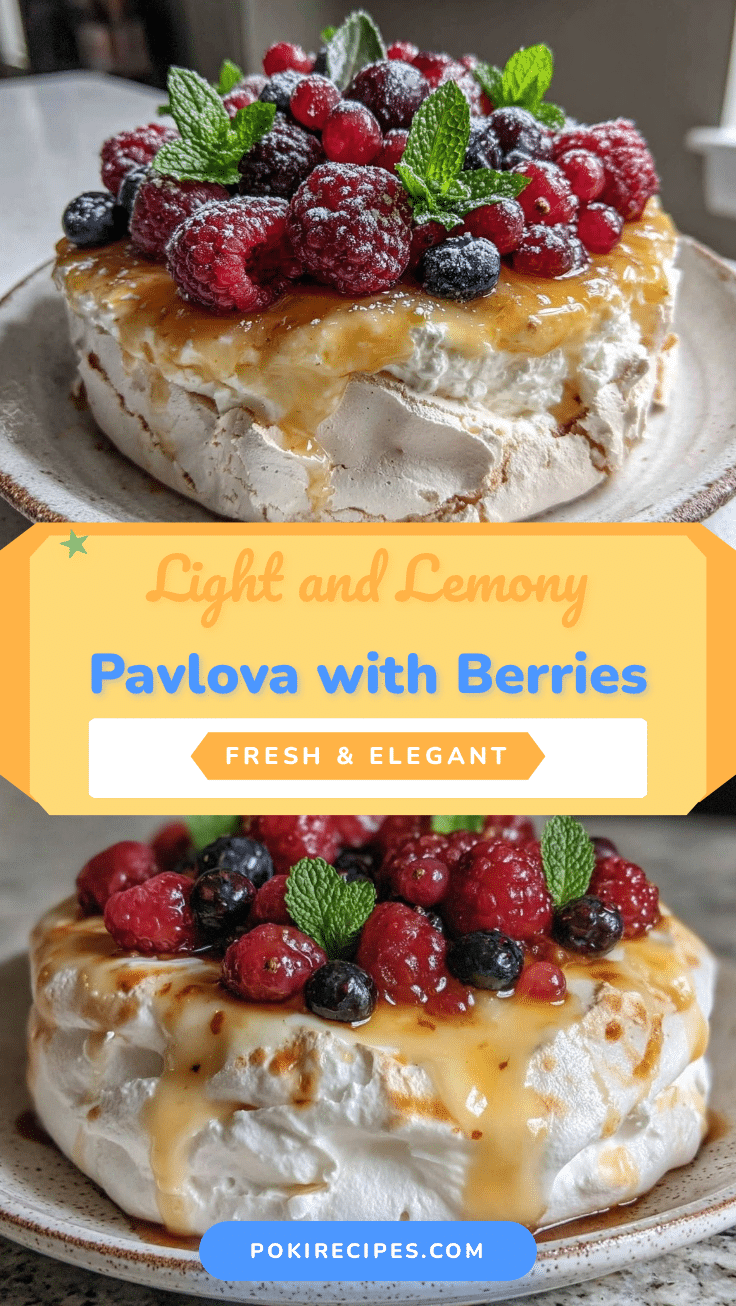
Fresh Lemon Curd Pavlova with Berries
A light and elegant summer dessert featuring a crisp pavlova shell filled with homemade lemon curd and topped with fresh mixed berries. Perfect for parties and quick to prepare.
- Prep Time: 15 minutes
- Cook Time: 70 minutes
- Total Time: 1 hour 25 minutes
- Yield: 8 servings 1x
- Category: Dessert
- Cuisine: Australian/New Zealand
Ingredients
- 4 large egg whites, room temperature
- 1 cup (200g) granulated sugar
- 1 teaspoon white vinegar
- 1 teaspoon cornstarch
- Pinch of salt
- 3 large eggs
- 1 cup (200g) granulated sugar
- 1/2 cup (120ml) freshly squeezed lemon juice (about 3–4 lemons)
- 1 tablespoon lemon zest
- 6 tablespoons (85g) unsalted butter, cubed and softened
- 1 cup mixed fresh berries (strawberries, blueberries, raspberries, blackberries)
- Optional: a few fresh mint leaves for garnish
Instructions
- Preheat oven to 275°F (135°C). Line a baking sheet with parchment paper and draw a 7-inch (18 cm) circle to guide the meringue shape.
- In a clean, dry mixing bowl, whisk 4 egg whites with a pinch of salt on medium speed until soft peaks form (about 2-3 minutes).
- Gradually add 1 cup (200g) sugar, one tablespoon at a time, while whisking on high until the mixture is glossy and stiff peaks form (about 5-7 minutes). Test by rubbing a bit between fingers to check for sugar granules.
- Gently fold in 1 teaspoon vinegar and 1 teaspoon cornstarch using a spatula.
- Spoon the meringue onto the parchment inside the circle, shaping with slightly higher edges to hold the lemon curd. Smooth the top but keep it rustic.
- Bake for 60-70 minutes until crisp on the outside and light. Turn off oven and leave pavlova inside to cool completely with door slightly ajar.
- While pavlova bakes, whisk together 3 eggs, 1 cup (200g) sugar, 1/2 cup (120ml) lemon juice, and lemon zest in a medium saucepan.
- Place pan over low heat and cook, stirring constantly, until mixture thickens enough to coat the back of a spoon (about 8-10 minutes). Avoid boiling.
- Remove from heat and whisk in softened butter until smooth. Pour curd into a bowl and cover with plastic wrap touching the surface. Chill until ready to use.
- Once pavlova is completely cool, transfer to serving plate. Spread chilled lemon curd evenly inside the meringue shell.
- Top with fresh mixed berries and garnish with mint leaves if desired.
- Serve immediately for best texture contrast.
Notes
Use organic lemons for best flavor. Bake pavlova on a dry day or use a dehumidifier to prevent weeping. Cool pavlova gradually in oven with door ajar to avoid cracks. Lemon curd can be made ahead and stored up to 3 days refrigerated. For dairy-free, substitute butter with coconut oil in lemon curd. Serve pavlova fresh at room temperature for best texture.
Nutrition
- Serving Size: 1 slice (1/8 of pavl
- Calories: 220
- Fat: 5
- Carbohydrates: 38
- Fiber: 2
- Protein: 3
Keywords: lemon curd, pavlova, berries, summer dessert, homemade dessert, easy dessert, gluten-free dessert, meringue, fresh berries