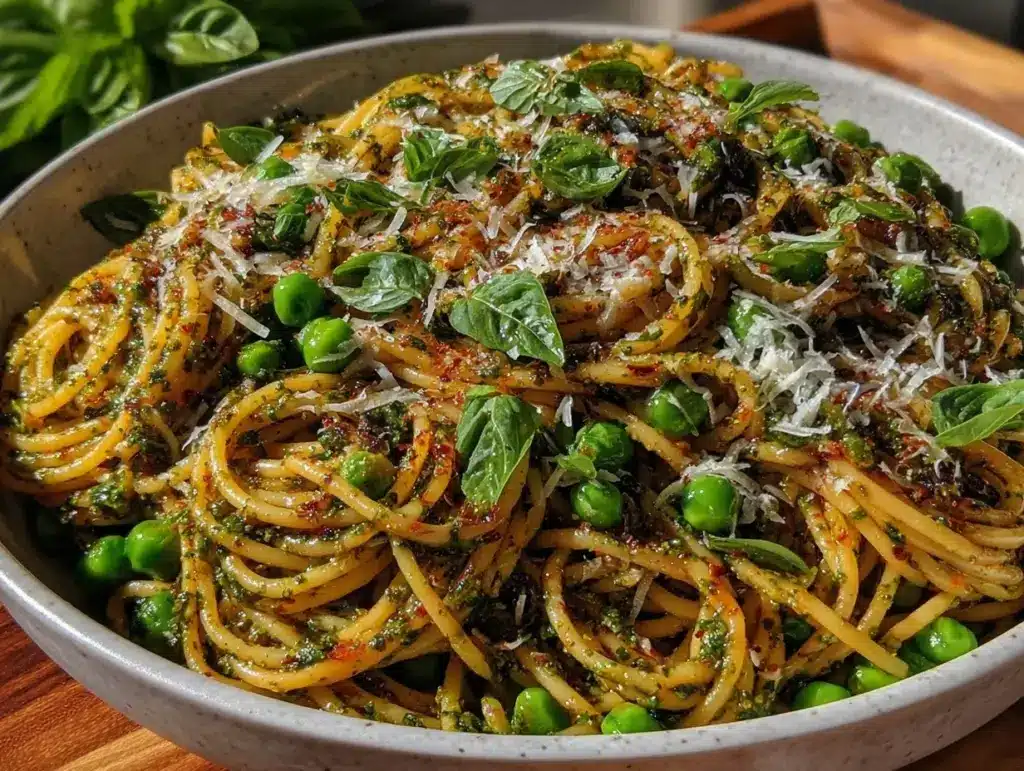
The smell of fresh basil and lemon zest hits you the moment this best spring pesto pasta with peas starts to come together. Honestly, it’s like a little green garden party on your plate! I first whipped up this vibrant pasta dish on a bright spring afternoon when I was craving something light but still packed with flavor. You know those meals that feel both comforting and refreshing? This pesto pasta nails it every single time.
What makes this recipe really special to me is how easily it brings the bright, fresh flavors of spring right into your kitchen. And I’ve made it over and over — sometimes switching up the herbs or tossing in a handful of toasted pine nuts for a crunch. As someone who loves cooking but doesn’t always have hours to spend, this recipe is a total win. It’s quick, satisfying, and perfect for those days when you want something easy but memorable.
If you’re looking for a dinner idea that’s both vibrant and easy to throw together, the best spring pesto pasta with peas is exactly what you need. Plus, it’s a great way to get a little green into your meal with those sweet peas packed into the mix. Whether you’re feeding a crowd or just treating yourself, this pasta dish is guaranteed to become a springtime staple.
Why You’ll Love This Recipe
- Quick & Easy: From start to finish, this pasta takes under 30 minutes — perfect for busy weeknights or last-minute dinner plans.
- Simple Ingredients: No complicated shopping trips here. It uses pantry basics and fresh spring produce, so you can whip it up anytime.
- Perfect for Spring & Summer: This dish screams sunny days and garden freshness, ideal for brunches, light dinners, or potlucks.
- Crowd-Pleaser: Kids and adults alike adore the creamy pesto combined with sweet bursts of peas and al dente pasta.
- Unbelievably Delicious: The bright herbaceous notes and creamy texture create a flavor combo that’s both comforting and exciting.
What sets this best spring pesto pasta with peas apart from other pesto recipes is the way I blend a few secret touches — like a squeeze of lemon for that fresh zing and the addition of tender peas for sweetness and texture. It’s not just a pesto pasta; it’s a celebration of everything good about springtime flavors coming together on one plate.
Trust me, after the first bite, you’ll want to make this again and again. It’s the kind of dish that makes you pause, close your eyes, and really savor the moment. Plus, it’s versatile enough to impress guests without breaking a sweat in the kitchen.
What Ingredients You Will Need
This recipe brings together simple, wholesome ingredients to deliver bold flavor and a satisfying texture without any fuss. Most of these ingredients are pantry staples, with a few fresh spring touches.
- For the Pesto:
- Fresh basil leaves (about 2 cups packed) – the star of the show, fragrant and fresh
- Pine nuts (1/4 cup) – I love to toast these lightly for a nuttier flavor
- Parmesan cheese, grated (1/2 cup) – adds richness and that signature cheesy punch
- Garlic cloves (2 medium) – for a gentle kick
- Extra virgin olive oil (1/2 cup) – use a good quality brand like Colavita for the best flavor
- Fresh lemon juice (1 tablespoon) – brightens and lifts the pesto’s flavor
- Salt and freshly ground black pepper – to taste
- For the Pasta Dish:
- Pasta of your choice (12 oz / 340 g) – I usually go with linguine or fettuccine for a silky texture
- Frozen or fresh peas (1 cup) – sweet little pops of flavor and color
- Cherry tomatoes (optional, 1 cup halved) – for extra freshness and a pop of color
- Fresh basil leaves for garnish – because, well, more basil is always better!
- Salt for pasta water
If you want to swap things up, almond or walnut pieces can replace pine nuts for a different nutty taste. For a dairy-free pesto, just leave out the Parmesan or try nutritional yeast instead. When basil isn’t at its peak, a mix of parsley and spinach can fill in beautifully.
Equipment Needed
- Large pot for boiling pasta – a basic, sturdy option works great
- Food processor or blender – essential for making that creamy, smooth pesto. I’ve tried a mortar and pestle, but the processor saves time and effort.
- Colander or strainer – for draining the pasta and peas
- Mixing bowl – to toss everything together
- Measuring cups and spoons – to keep your proportions just right
- Optional: wooden spoon or spatula – for stirring
If you don’t have a food processor, a sturdy blender can do the job, but you might need to scrape down the sides a few times. Personally, I find a food processor is worth the investment for pesto and other sauce recipes. For budget-friendly setups, many kitchen stores offer affordable, compact models that save space without skimping on power.
Detailed Preparation Method
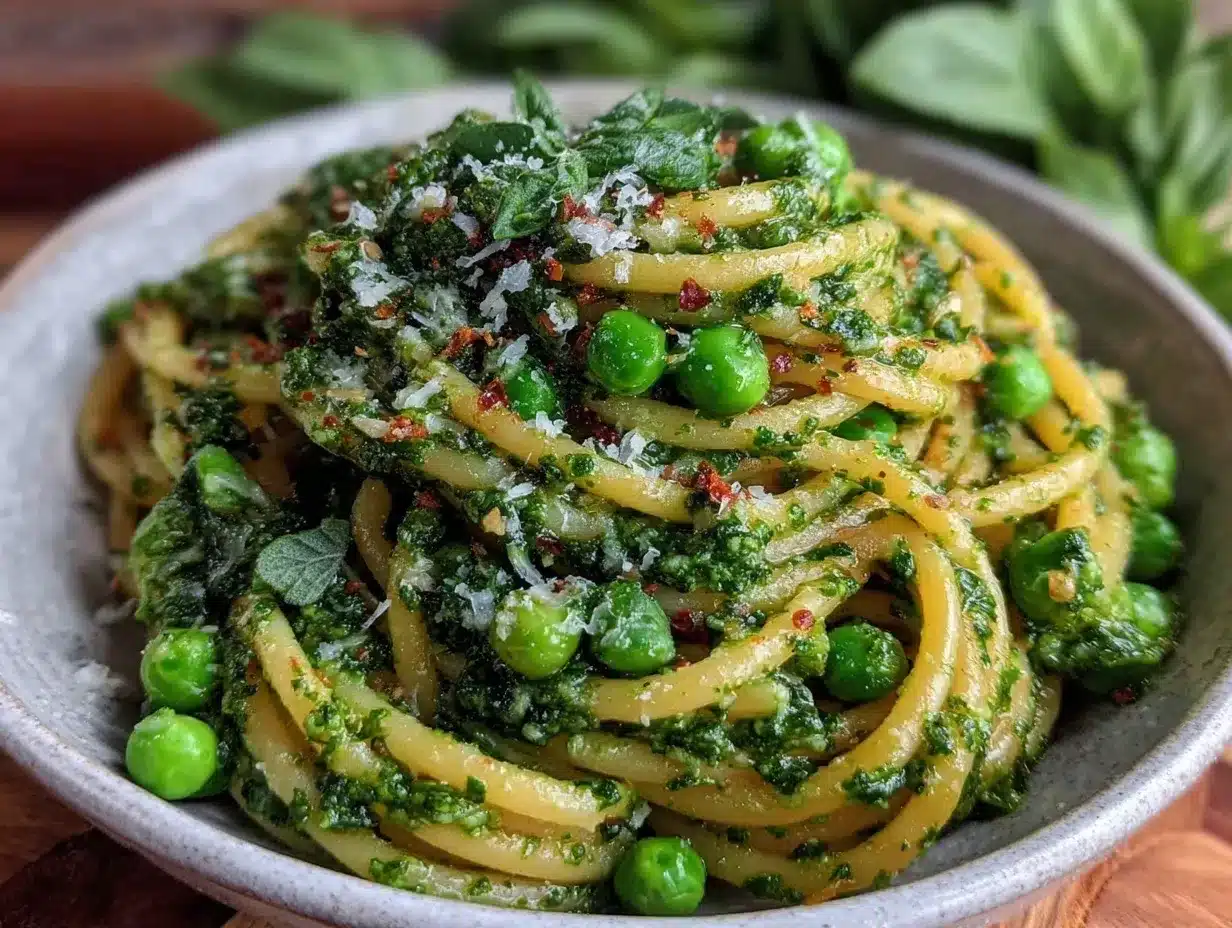
- Cook the Pasta and Peas: Bring a large pot of salted water to a boil. Add 12 oz (340 g) of your chosen pasta and cook according to package instructions until al dente, usually about 8-10 minutes. In the last 2 minutes of cooking, toss in 1 cup of frozen peas to cook alongside. Drain pasta and peas together, reserving about 1/2 cup (120 ml) of the pasta water. (Pro tip: saving some pasta water helps loosen the pesto sauce later!)
- Make the Pesto: While pasta cooks, add 2 cups packed fresh basil leaves, 1/4 cup toasted pine nuts, 1/2 cup grated Parmesan cheese, and 2 garlic cloves to your food processor. Pulse a few times to combine. Then, with the processor running, slowly drizzle in 1/2 cup extra virgin olive oil until the mixture is smooth and creamy. Add 1 tablespoon fresh lemon juice, salt, and freshly ground pepper to taste. Give it a quick pulse again just to mix everything evenly. (If the pesto looks too thick, add a tablespoon or two of pasta water to loosen it up.)
- Toss Together: In a large mixing bowl, combine the drained pasta and peas with the pesto. Toss gently but thoroughly so every strand of pasta is coated with that vibrant green sauce. If you want, add 1 cup halved cherry tomatoes for a juicy burst. (Tip: If the pasta feels dry, add a splash of the reserved pasta water and toss again.)
- Serve: Plate the pesto pasta and garnish with a few fresh basil leaves and an extra sprinkle of Parmesan if you like. Serve immediately while it’s fresh and bright, or keep warm for up to 10 minutes before serving. (If you’re prepping ahead, toss with a little olive oil to prevent sticking.)
Cooking Tips & Techniques
Making the best spring pesto pasta with peas is all about balancing freshness and texture. Here are some tips I’ve picked up after many batches:
- Toast your pine nuts: It might seem small, but lightly toasting the nuts brings out that deep, nutty flavor and adds complexity to your pesto.
- Don’t over-blend the pesto: Keep an eye on the texture. You want it smooth but not pureed into a paste. A little chunkiness gives it character.
- Cook peas last: Adding peas in the final minutes of pasta boiling keeps them tender but still vibrant and sweet.
- Reserve pasta water: The starchy water is magic for loosening pesto without watering down flavor.
- Use fresh basil: Dried just won’t cut it here. Fresh leaves bring that unmistakable aroma and taste.
- Watch your salt: Since Parmesan is salty, add salt gradually and taste as you go.
I once over-salted my pesto in a hurry — lesson learned the hard way! Taking it slow and tasting often really pays off. Also, multitasking by making the pesto while pasta cooks saves time and keeps the kitchen workflow smooth.
Variations & Adaptations
This recipe is flexible, so go ahead and tweak it to your liking:
- Dietary Swap: For a vegan version, swap Parmesan with nutritional yeast and use a dairy-free cheese alternative or skip cheese entirely.
- Seasonal Twist: In late spring or summer, toss in fresh peas instead of frozen, or add baby spinach for extra greens.
- Flavor Boost: Stir in a teaspoon of lemon zest or a pinch of chili flakes for a little extra kick.
- Nut-Free: Replace pine nuts with toasted pumpkin seeds or sunflower seeds to avoid nuts altogether.
- Personal Favorite: I love adding a handful of arugula to the pesto for a peppery note that balances the sweetness of peas beautifully.
Serving & Storage Suggestions
This best spring pesto pasta with peas shines when served warm or at room temperature. Serve it straight after mixing for the freshest taste and vibrant color. For a pretty presentation, garnish with a few whole basil leaves and a sprinkle of Parmesan.
Pair it with a crisp white wine like Sauvignon Blanc or a light sparkling water with lemon for a refreshing combo. This pasta also pairs well with a simple green salad or crusty garlic bread to round out the meal.
Leftovers? No worries. Store in an airtight container in the refrigerator for up to 3 days. When reheating, add a splash of water or olive oil to loosen the sauce and warm gently on the stove or in the microwave. Flavors actually develop more over time, so the next day might be even better!
Nutritional Information & Benefits
Each serving of this pasta (makes about 4 servings) is roughly:
| Nutrient | Amount |
|---|---|
| Calories | 450-500 kcal |
| Protein | 18-20 g |
| Carbohydrates | 55-60 g |
| Fat | 18-20 g (mostly healthy fats from olive oil and nuts) |
| Fiber | 6-8 g |
This dish is a good source of plant-based protein and healthy fats thanks to the pine nuts and olive oil. Peas add fiber, vitamins A and C, and a natural sweetness that balances the savory pesto. Plus, fresh basil is loaded with antioxidants and has anti-inflammatory properties. For those watching gluten intake, swapping regular pasta with gluten-free varieties works perfectly here.
Conclusion
The best spring pesto pasta with peas is a refreshing, easy, and downright delicious meal that brings the bright flavors of spring right to your table. It’s quick enough for busy nights but special enough to impress any guest. I love how it combines simple ingredients into something that feels both wholesome and indulgent.
Don’t be afraid to make this recipe your own — swap nuts, add a twist of lemon, or toss in your favorite veggies. I’d love to hear how you customize it! Please leave a comment or share your version if you give this a try.
Trust me, once you have this vibrant pasta in your rotation, it’s going to be your go-to spring dinner idea for years to come. Happy cooking!
FAQs About Best Spring Pesto Pasta with Peas
Can I make the pesto ahead of time?
Yes! You can prepare the pesto up to 2 days in advance and store it in an airtight container in the fridge. Just give it a good stir and add a little olive oil before using.
What type of pasta works best for this recipe?
I prefer linguine or fettuccine because they hold the pesto sauce well, but penne, farfalle, or spaghetti also work great.
Can I use fresh peas instead of frozen?
Absolutely! Fresh peas add an extra sweetness and texture. Just blanch them for a couple of minutes before adding.
Is this recipe suitable for vegans?
It can be! Just swap out Parmesan for nutritional yeast or a vegan cheese alternative.
How do I prevent the pesto from turning brown?
Use fresh basil and add lemon juice when blending. Store leftover pesto with a thin layer of olive oil on top to keep it vibrant longer.
Pin This Recipe!
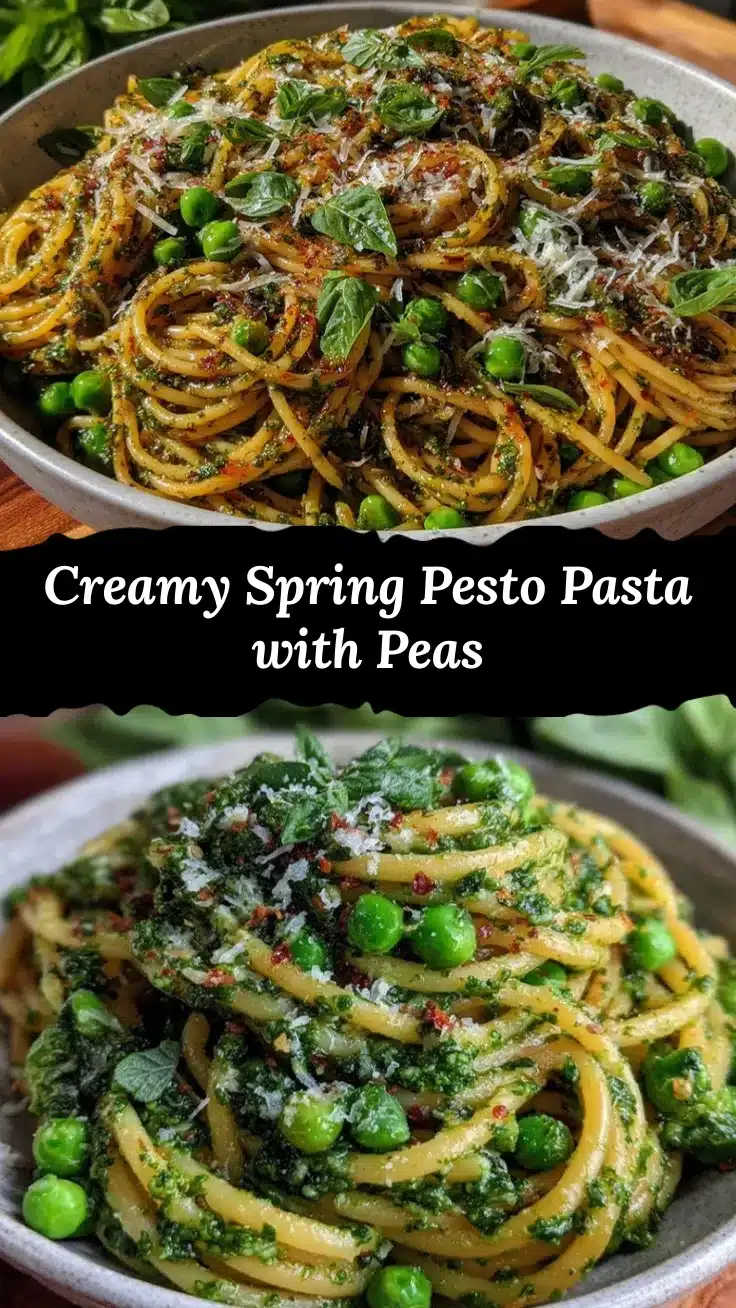
Best Spring Pesto Pasta with Peas

A vibrant and easy spring pasta dish featuring fresh basil pesto and sweet peas, perfect for a quick and flavorful dinner.
- Prep Time: 10 minutes
- Cook Time: 15 minutes
- Total Time: 25 minutes
- Yield: 4 servings 1x
- Category: Main Course
- Cuisine: Italian
Ingredients
- 2 cups packed fresh basil leaves
- 1/4 cup toasted pine nuts
- 1/2 cup grated Parmesan cheese
- 2 medium garlic cloves
- 1/2 cup extra virgin olive oil
- 1 tablespoon fresh lemon juice
- Salt and freshly ground black pepper to taste
- 12 oz pasta of your choice (linguine or fettuccine recommended)
- 1 cup frozen or fresh peas
- 1 cup halved cherry tomatoes (optional)
- Fresh basil leaves for garnish
- Salt for pasta water
Instructions
- Bring a large pot of salted water to a boil. Add 12 oz of pasta and cook according to package instructions until al dente, about 8-10 minutes. In the last 2 minutes, add 1 cup of frozen peas. Drain pasta and peas together, reserving 1/2 cup of pasta water.
- While pasta cooks, combine 2 cups packed fresh basil leaves, 1/4 cup toasted pine nuts, 1/2 cup grated Parmesan cheese, and 2 garlic cloves in a food processor. Pulse to combine. With processor running, slowly drizzle in 1/2 cup extra virgin olive oil until smooth and creamy. Add 1 tablespoon fresh lemon juice, salt, and pepper to taste. Pulse again to mix. Add reserved pasta water if pesto is too thick.
- In a large mixing bowl, toss the drained pasta and peas with the pesto until evenly coated. Add 1 cup halved cherry tomatoes if desired. Add reserved pasta water if needed to loosen sauce.
- Serve immediately garnished with fresh basil leaves and extra Parmesan if desired. Keep warm up to 10 minutes or toss with olive oil if preparing ahead.
Notes
Toast pine nuts lightly for deeper flavor. Do not over-blend pesto to keep some texture. Reserve pasta water to loosen pesto sauce. Use fresh basil for best flavor. Add salt gradually due to Parmesan saltiness. Pesto can be made up to 2 days ahead and stored refrigerated.
Nutrition
- Serving Size: 1 serving (about 1/4
- Calories: 475
- Sugar: 5
- Sodium: 350
- Fat: 19
- Saturated Fat: 3.5
- Carbohydrates: 58
- Fiber: 7
- Protein: 19
Keywords: spring pesto pasta, peas pasta, easy pesto recipe, fresh basil pasta, quick dinner, vegetarian pasta, spring dinner idea