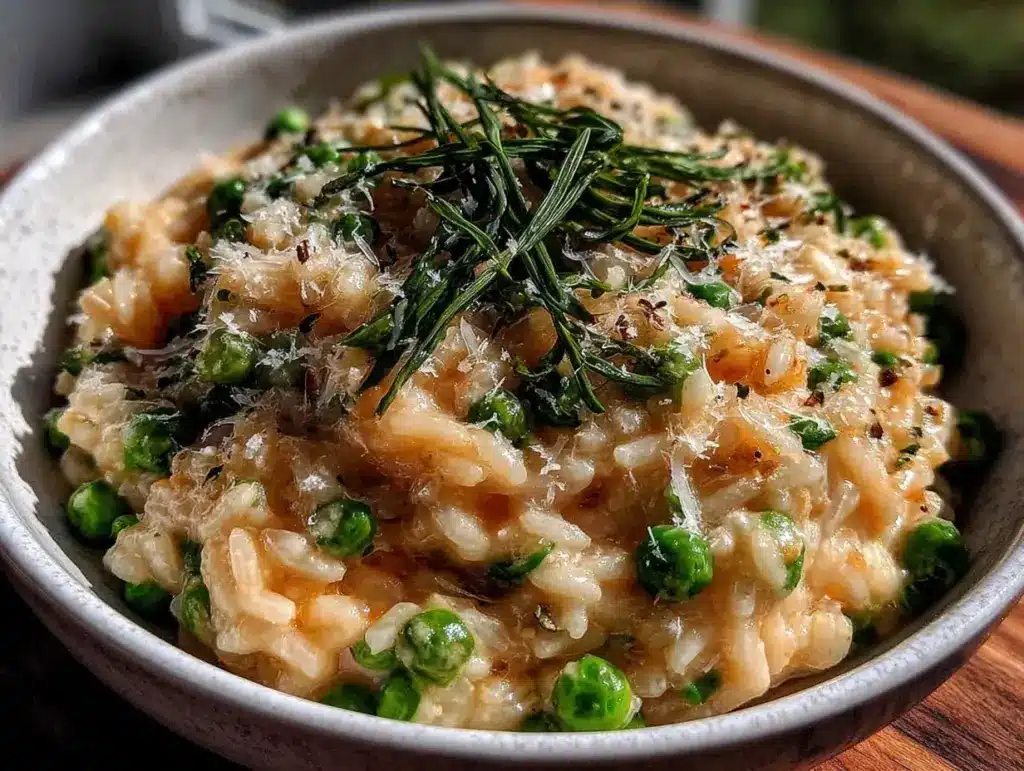
The smell of fresh spring peas mingled with creamy Arborio rice simmering gently in broth—it’s a scent that never fails to brighten my kitchen. I first stumbled upon this spring pea risotto recipe on a crisp April afternoon when I wanted something light yet comforting. Honestly, it felt like a little celebration of the season right in my bowl. This irresistible spring pea risotto balances creaminess with the bright, sweet pop of fresh peas, making it a perfect dish when you crave something both nourishing and a bit indulgent.
I’ve made this spring pea risotto dozens of times, tweaking it here and there, and it’s become a go-to for friends and family. It’s not just a recipe; it’s a ritual that brings the freshness of spring indoors, no matter the weather outside. If you’re someone who loves creamy risotto but also wants that clean, green freshness, this recipe will quickly become your new favorite.
Whether you’re cooking for a cozy dinner or impressing guests with seasonal flair, this spring pea risotto delivers on flavor and texture. Plus, it’s surprisingly easy to pull off, even if you’re new to risotto. Let me share why this creamy, fresh recipe is worth making as soon as peas hit the market.
Why You’ll Love This Recipe
After making this spring pea risotto time and again, here’s why it stands out in my kitchen and hopefully yours:
- Quick & Easy: It comes together in about 30 minutes, perfect for busy weeknights when you want something special but don’t want to fuss.
- Simple Ingredients: You probably already have most of these in your pantry and fridge—no last-minute store runs needed!
- Perfect for Spring: This recipe celebrates fresh peas at their peak, making it ideal for spring dinners, brunches, or light lunches.
- Crowd-Pleaser: It’s creamy and comforting yet fresh and vibrant, winning over both risotto veterans and skeptics alike.
- Unbelievably Delicious: The subtle sweetness of peas with the creamy texture of risotto creates a flavor and mouthfeel combo that just hits the spot every time.
What makes this spring pea risotto different? Well, the key is in the balance—the peas are added at just the right time to keep their brightness, and the risotto is stirred lovingly (yes, it’s worth it!) to get that perfect creaminess. Plus, I’ve found that finishing with a touch of lemon zest and Parmesan adds a fresh zing that takes it over the edge.
This isn’t just another risotto recipe—it’s comfort food with a fresh twist that makes you close your eyes and smile after each bite. Ready to make your kitchen smell amazing?
What Ingredients You Will Need
This spring pea risotto uses simple, fresh ingredients to deliver a rich, satisfying dish without any fuss. Here’s what you’ll need:
- Arborio rice (1 ½ cups / 300g) – the star of any risotto for its creamy, starchy texture.
- Fresh spring peas (1 cup / 150g) – peeled and bright green; frozen peas can work too if fresh aren’t available.
- Vegetable or chicken broth (4 cups / 1 liter) – kept warm to gradually cook the rice.
- Dry white wine (½ cup / 120ml) – adds acidity and depth (optional but recommended).
- Shallot (1 medium, finely chopped) – mild and sweet, perfect for the base.
- Garlic (2 cloves, minced) – for subtle aromatic flavor.
- Olive oil (2 tablespoons) – for sautéing.
- Unsalted butter (2 tablespoons) – adds richness and creaminess at the end.
- Parmesan cheese (½ cup / 50g, freshly grated) – for that cheesy, savory finish.
- Lemon zest (from 1 lemon) – brightens the whole dish.
- Fresh mint or basil (a few leaves, chopped) – optional, but adds a lovely herbal note.
- Salt and pepper – to taste.
For the best results, I recommend using a good-quality broth like Pacific Foods or homemade if you have the time. Also, if you want a dairy-free version, swap butter for olive oil and skip the Parmesan, or try a vegan cheese alternative.
Equipment Needed
- Medium-sized heavy-bottomed saucepan or sauté pan: A wide pan helps the rice cook evenly—nonstick or stainless steel both work.
- Ladle: Essential for adding broth gradually and stirring.
- Wooden spoon or silicone spatula: For stirring the risotto without scratching your pan.
- Fine grater or microplane: For zesting lemon and grating Parmesan finely.
- Measuring cups and spoons: To keep ingredient amounts accurate.
If you don’t have a heavy-bottomed pan, just go slow with the heat to avoid burning. I once made this in a regular pot and it worked fine, just stirred more carefully. Ladles can be found inexpensively at most kitchen stores if you don’t own one already, and a wooden spoon is a classic that’s lasted me years.
Detailed Preparation Method
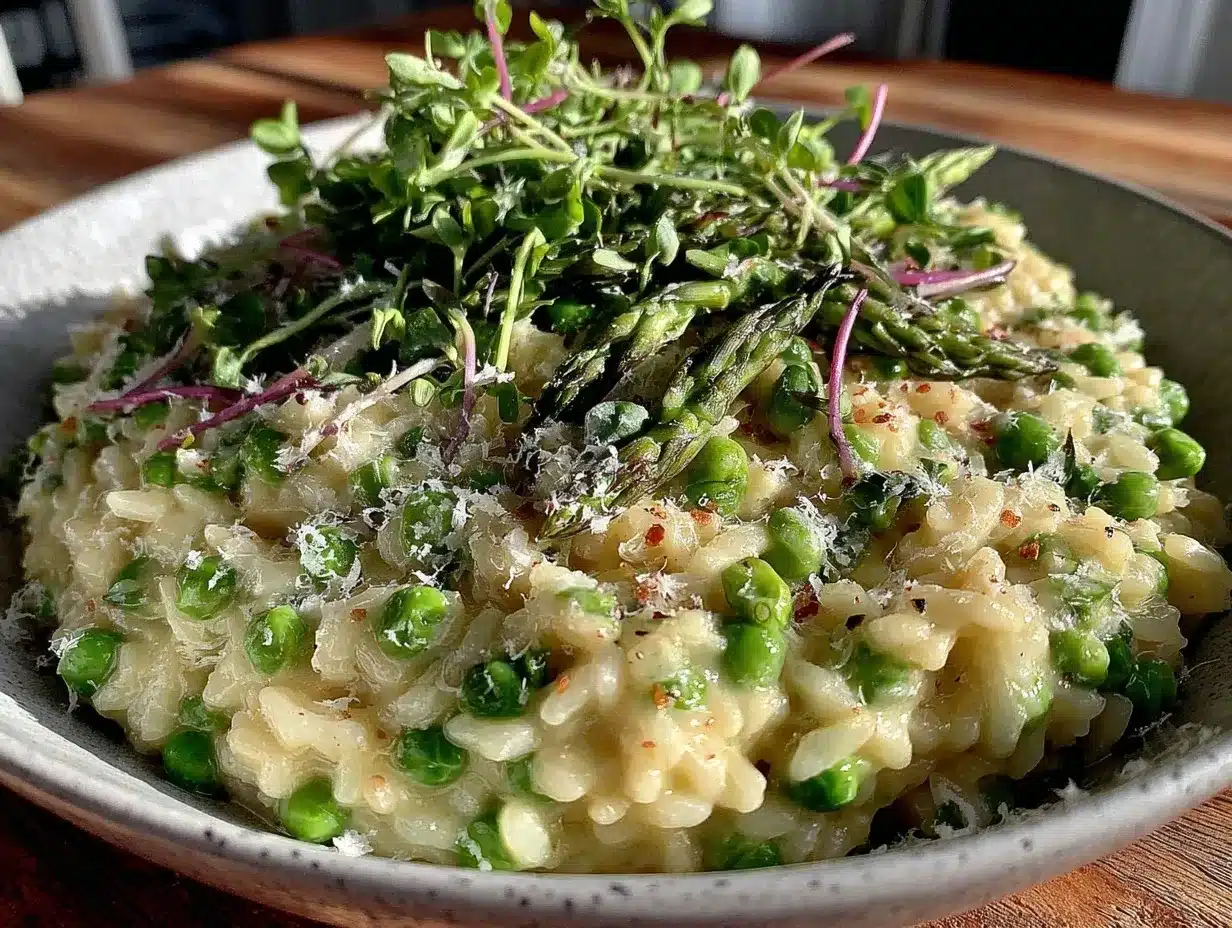
- Warm your broth: Pour 4 cups (1 liter) of broth into a saucepan and keep it at a gentle simmer on low heat. This helps the rice cook evenly without cooling down each time you add liquid. (About 5 minutes)
- Sauté shallots and garlic: In your main pan, heat 2 tablespoons olive oil over medium heat. Add the finely chopped shallot and cook until translucent, about 2-3 minutes. Toss in the minced garlic and cook for 30 seconds until fragrant—don’t let it brown!
- Add Arborio rice: Pour in 1 ½ cups (300g) of Arborio rice. Stir well, coating each grain with oil and shallots. This toasting step takes about 2 minutes and helps the rice absorb flavors.
- Deglaze with white wine: Pour ½ cup (120ml) dry white wine into the pan and stir until almost fully absorbed. This adds a subtle tanginess and depth to the risotto base. If you’re skipping wine, start adding broth here instead.
- Begin adding broth gradually: Add a ladleful (about ½ cup / 120ml) of warm broth to the rice. Stir continuously until the liquid is nearly absorbed. Repeat this ladle-by-ladle process, stirring often, allowing the rice to release its starch and become creamy. This step takes about 18-20 minutes. Patience is key here!
- Add spring peas: When the rice is almost tender but still has a slight bite (after about 15 minutes), stir in your 1 cup (150g) of fresh peas. Continue adding broth ladle-by-ladle and stirring until the peas are tender and the rice is perfectly creamy.
- Finish with butter, cheese & lemon zest: Remove the pan from heat. Stir in 2 tablespoons unsalted butter, ½ cup (50g) freshly grated Parmesan, and the zest of one lemon. Season with salt and pepper to taste. The risotto should be creamy but not soupy, with a bright, fresh flavor.
- Optional herbs: Sprinkle chopped fresh mint or basil on top right before serving for an herby pop.
Tip: Taste the risotto often during cooking to check texture. It should be creamy and the rice tender but with a slight chew (al dente). If it feels dry before fully cooked, add a little more warm broth or water.
Cooking Tips & Techniques
Risotto is all about patience and technique. Here’s what I’ve learned from many attempts (and occasional flops!):
- Keep broth warm: Adding cold broth cools the rice and slows cooking. I always keep my broth on low heat nearby.
- Stir often but not constantly: You don’t need to stir every second, but frequent stirring helps release the rice’s starch and prevents sticking.
- Use medium heat: Too high, and the liquid evaporates too fast; too low, and the rice cooks unevenly.
- Don’t rush adding broth: Wait until the previous ladle is mostly absorbed before adding more. It’s tempting to pour it all in, but risotto rewards slow cooking.
- Fresh peas timing: Add peas late so they stay bright and tender, not mushy.
- Finish off the heat: Stir in butter and cheese off the stove to keep the texture silky and avoid curdling.
One time I skipped warming the broth and the risotto took forever to cook—lesson learned! Also, stirring with a wooden spoon feels more natural and less likely to overwork the rice compared to metal utensils.
Variations & Adaptations
Want to switch things up? Here are some tasty variations I’ve tried or recommend:
- Vegan version: Use vegetable broth, swap butter for olive oil, and replace Parmesan with nutritional yeast or vegan cheese.
- Add herbs and greens: Stir in spinach, arugula, or fresh dill in the last few minutes for extra color and flavor.
- Protein boost: Top with grilled shrimp, pan-seared chicken, or crispy pancetta for a heartier meal.
- Seasonal swaps: Try using fresh asparagus tips or peas mixed with baby fava beans for springtime variety.
- Cooking method: For a hands-off approach, you can bake the risotto in the oven with broth added all at once, stirring halfway through—but stirring on the stove yields creamier results.
Personally, I love adding a handful of chopped fresh basil and a squeeze of lemon juice for extra brightness. The beauty of this risotto is how easy it is to adapt without losing that creamy, fresh appeal.
Serving & Storage Suggestions
Serve your spring pea risotto warm, fresh from the stove. It’s lovely plated in shallow bowls with a sprinkle of extra Parmesan and a few fresh herb leaves for garnish.
This risotto pairs wonderfully with a crisp white wine or a light sparkling water with lemon. For a complete meal, add a simple salad or roasted chicken on the side.
Leftovers can be stored in an airtight container in the fridge for up to 2 days. To reheat, add a splash of broth or water and gently warm on the stove, stirring until creamy again. Risotto thickens as it cools, so reheating with liquid helps bring back that luscious texture.
Flavors actually deepen overnight, so if you make it ahead, you might find it even tastier the next day (just remember to loosen it up when reheating!).
Nutritional Information & Benefits
This spring pea risotto is not only delicious but packs some good-for-you nutrients. A serving (about 1 cup / 250g) roughly contains:
| Calories | 350-400 kcal |
|---|---|
| Protein | 12-15g |
| Carbohydrates | 55g |
| Fat | 8-10g |
| Fiber | 5g |
Peas bring a good dose of fiber, vitamin C, and plant-based protein, while Parmesan adds calcium and a savory punch. Using broth instead of heavy cream keeps it lighter than many risotto recipes.
This dish fits well in vegetarian diets and can be adapted for gluten-free by choosing gluten-free broth. If you have dairy allergies, just swap butter and cheese as mentioned earlier.
I often enjoy this risotto after a workout or when I need a meal that feels both comforting and nourishing—it’s like a hug on a plate.
Conclusion
So there you have it—my irresistible spring pea risotto recipe that’s creamy, fresh, and surprisingly easy to make. Whether you’re new to risotto or a seasoned pro, this dish offers a wonderful way to celebrate spring’s bounty in a comforting meal.
Feel free to tweak it to your taste—add herbs, protein, or go vegan! I love how versatile this recipe is without losing its soul-soothing texture and bright flavors.
If you try it, please drop a comment below sharing your experience or any personal twists you made. And hey, don’t forget to share this recipe with your fellow food lovers who deserve a little spring in their step!
Happy cooking, and may your kitchen always smell like fresh peas and buttery goodness!
Frequently Asked Questions
Can I use frozen peas instead of fresh spring peas?
Yes! Frozen peas work well if fresh ones aren’t available. Just add them a minute or two earlier to ensure they cook through.
What if I don’t have white wine?
You can skip the wine and replace it with an equal amount of broth or a splash of lemon juice for acidity.
How do I know when the risotto is done?
The rice should be tender but still have a slight bite (al dente) and the dish should be creamy without being soupy or dry.
Can I make this risotto ahead of time?
You can prepare it a day in advance and reheat gently with a splash of broth. It thickens when cooled, so stirring in liquid while reheating is key.
Is Arborio rice necessary, or can I use other rice?
Arborio rice is best for risotto because of its high starch content, which creates that creamy texture. Other short-grain rice can work, but avoid long-grain varieties.
Pin This Recipe!
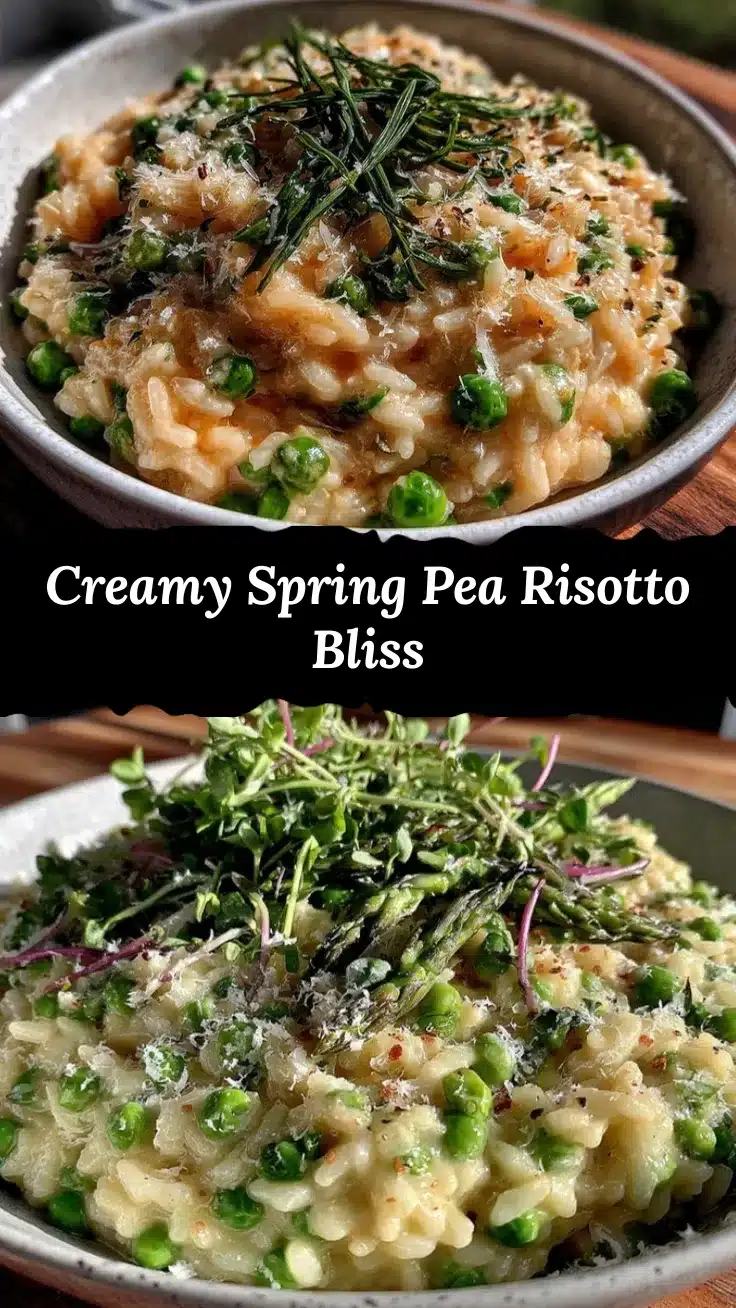
Irresistible Spring Pea Risotto

A creamy and fresh risotto featuring sweet spring peas and Arborio rice, perfect for celebrating the season with a light yet comforting meal.
- Prep Time: 10 minutes
- Cook Time: 30 minutes
- Total Time: 40 minutes
- Yield: 4 servings 1x
- Category: Main Course
- Cuisine: Italian
Ingredients
- 1 ½ cups (300g) Arborio rice
- 1 cup (150g) fresh spring peas, peeled (frozen peas can be used as substitute)
- 4 cups (1 liter) vegetable or chicken broth, kept warm
- ½ cup (120ml) dry white wine (optional but recommended)
- 1 medium shallot, finely chopped
- 2 cloves garlic, minced
- 2 tablespoons olive oil
- 2 tablespoons unsalted butter
- ½ cup (50g) freshly grated Parmesan cheese
- Zest of 1 lemon
- A few leaves fresh mint or basil, chopped (optional)
- Salt and pepper to taste
Instructions
- Warm your broth by pouring 4 cups (1 liter) into a saucepan and keep it at a gentle simmer on low heat (about 5 minutes).
- In a medium-sized heavy-bottomed saucepan or sauté pan, heat 2 tablespoons olive oil over medium heat. Add the finely chopped shallot and cook until translucent, about 2-3 minutes.
- Add minced garlic and cook for 30 seconds until fragrant, being careful not to brown it.
- Add 1 ½ cups (300g) Arborio rice to the pan and stir well to coat each grain with oil and shallots. Toast the rice for about 2 minutes.
- Pour in ½ cup (120ml) dry white wine and stir until almost fully absorbed. If skipping wine, start adding broth here instead.
- Add a ladleful (about ½ cup / 120ml) of warm broth to the rice. Stir continuously until the liquid is nearly absorbed. Repeat this ladle-by-ladle process, stirring often, for about 18-20 minutes until rice is creamy and almost tender.
- After about 15 minutes, stir in 1 cup (150g) fresh peas. Continue adding broth ladle-by-ladle and stirring until peas are tender and rice is perfectly creamy.
- Remove the pan from heat. Stir in 2 tablespoons unsalted butter, ½ cup (50g) freshly grated Parmesan, and the zest of one lemon. Season with salt and pepper to taste.
- Optionally, sprinkle chopped fresh mint or basil on top before serving.
Notes
Keep broth warm to ensure even cooking and maintain temperature. Stir often but not constantly to release starch and prevent sticking. Add peas late to keep their brightness and tenderness. Finish off heat with butter and cheese to keep texture silky. For dairy-free, substitute butter with olive oil and Parmesan with vegan cheese or nutritional yeast.
Nutrition
- Serving Size: About 1 cup (250g)
- Calories: 375
- Sugar: 5
- Sodium: 600
- Fat: 9
- Saturated Fat: 4
- Carbohydrates: 55
- Fiber: 5
- Protein: 14
Keywords: spring pea risotto, creamy risotto, Arborio rice, fresh peas, easy risotto recipe, vegetarian risotto, spring recipes